Physics - Torque
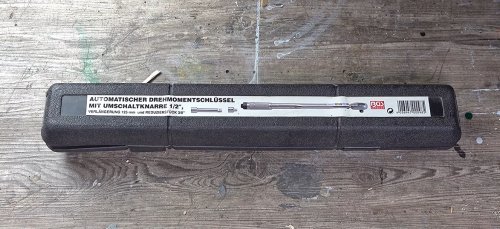
Torque, is a very important, let’s call it, construct. This does involve force, but it causes rotation rather than displacement,
as if you weren't pushing a vehicle, but rather turning it at a center axle nut, for example.
In what is arguably the most important part of automotive engineering - namely, the engine - torque is undoubtedly of crucial importance. After all, you can feel it almost every time you press the gas pedal, whereas
performance is often only associated with revving the engine.
So even if torque is also referred to as 'pulling power', it’s important to keep in mind that, in the case of an internal combustion engine, for example, this is achieved by converting a linear force into a rotational force. In an
electric motor, the rotational force acts, in effect, directly.
In vehicle powertrains, the speed at which torque is delivered is a critical factor. A charging curve should not be evaluated based solely on the maximum value, but rather on the average over a longer distance.
Because only then can you save gears in the transmission, which is precisely what e-mobility does to a great extent. Only the electric motor's optimal operating point, for example, in terms of fuel consumption, sometimes
still requires a second gear in spassenger cars and up to four gears in trucks.
When working on motor vehicles, torque comes up practically everywhere. This makes it easier to loosen the wheel bolts while the car is still on the ground. In that case, you might want to use a cross-head screwdriver to
generate twice the torque.
If that part of the vehicle is rigid enough, forces that can be increased nearly indefinitely are possible through extension. And although there isn't a long, sturdy pipe that fits over the wrench in
the toolbox, there's surely one somewhere nearby.
There is a much more common, but very nasty, problem here, namely that the required torque cannot be transmitted. Either the wrench slips, or the material of the screw or
nut is too soft or worn out.
The older the car, the bigger the problems. Some mechanics know right away, just by looking at the car when they receive a repair request, where they’ll be facing problems again very soon. Solutions to this problem could
probably fill entire libraries.
Torque that can't do its job. The entire all-wheel-drive industry depends on it. Often, it's not a lack of torque at all, but rather the inability to transfer it to the ground through just two wheels. Spinning out of control is simply a
break in the chain of force.
In addition, the engine speed at which maximum torque is achieved plays a major role here, again, primarily in the case of internal combustion engines. If the SUV lacks the option of an additional low-range gear, even all-
wheel drive can be useless because the engine keeps stalling.
|