Lamborghini V12 Lamborghini V12

| 1 - 7 - 4 - 10 - 2 - 8 - 6 - 12 - 3 - 9 - 5 - 11 |
This number pattern is intended to reflect a V12, more precisely its firing order. We assume two six-cylinder in-line engines that form an angle of 60° to each other. At one of them, the connecting rod bearings are
widened so that the connecting rods of the other six-cylinder have enough space. In the matrix below, you see on both outsides the firing order of the former six-cylinders '1 5 3 6 2 4'. This must also be maintained if
both should work together reasonably, only offset by 60°.
The two inner rows show the numbering according to standard. You look at the engine from the front end, the side opposite the power output, e.g. the clutch. You start at the left side in front and count the cylinder row to
the rear and then from front to back of the other cylinder row. Why is control important? For example, to check the correct installation of the ignition cables at the distributor/s on older engines.
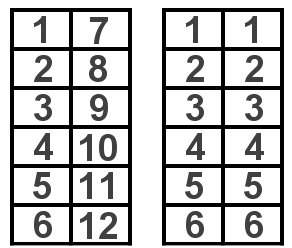
If you look at the V12 engine from the front and turn the crankshaft clockwise, the first cylinder of the twelve-cylinder first reaches top dead center (TDC) and then the seventh 60° later. Stubbornly in the order of the
original six-cylinder is No. 5 on top and then No. 11 on the other side. It all happens after to the following firing order:
| 1 - 7 - 5 - 11 - 3 - 9 - 6 - 12
- 2 - 8 - 4 - 10 |
At the numbers in bold you may still recognize the old firing order of the six-cylinder. But since we have not yet reached a consensus with the numbers above, we now try a different scheme. We simply reverse the firing
order of the six-cylinder, so let it run the other way around. For this we write the previous firing order twice:
| 1 - 5 - 3 - 6 - 2 - 4 - 1 - 5 - 3 - 6 - 2 - 4 |
Now we take the numbers backwards from the second '1':
Now if you compare to the firing order at the top again, you'll see from the highlighted numbers that we're on the right track.
| 1 - 7 - 4 - 10 - 2 - 8 - 6 - 12 - 3 - 9 - 5 - 11 |
Here you can once again follow the same procedure as described above. Assuming the other six-cylinder firing order, we arrive at the result given above. It is also known that Lamborghini had problems with the first
engines. Some sources speak of a belt drive, that wears out too quickly, others of unpleasant noises. Anyway, changing the direction obviously solved the problems.
| Basically, each combustion engine has at least two firing orders depending on the direction of
rotation. |
However, there was a cut with the Aventador in 2011. Its crankshaft is cranked differently and it can cope better with the enormous torsional loads, there is another kind of firing order here.

Firing order of a Lamborghini Aventador
1 12 4 9 2 11 6 7 3 10 5 8
|