Cooling 1 Cooling 1

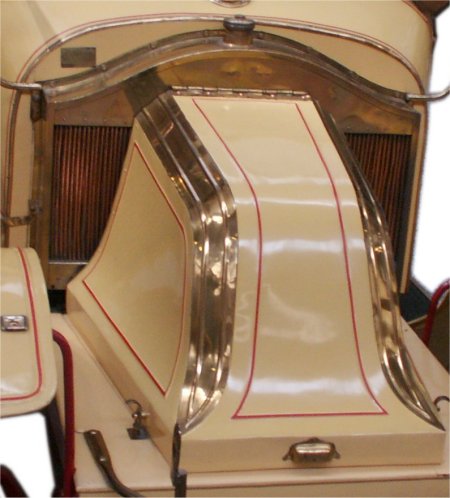
It is probably still the most distinctive part of the cooling system, even though its influence on the shape of the body has clearly diminished. Shown above is a version made of cast aluminum for slightly more
expensive cars. It is said to be somewhat sensitive to steam jets directed at it.
It also requires certain screw connections and care due to the voltsge series. Don't think for a moment that its usual spot has always been at the front of the vehicle. It can also be located behind the engine
right from the start of vehicle development.
Renault is famous for this type of design (picture), though one shouldn’t make the mistake of assuming that every early car with a radiator behind the engine is a Renault. Incidentally, this company later
distinguished itself with its unconventional radiator designs.
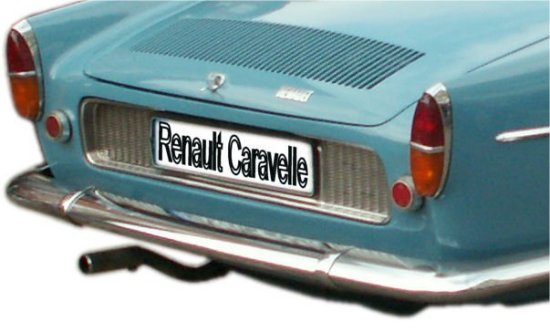
For example, in the Renault Floride/Caravelle from the 1960s, the cooler is located entirely at the rear, with air entering through vents in the rear hood and exiting through vents in the rear panel. In any case, the
generation of liquid-cooled rear-mounted engines is driving designers to ever new feats.
If you look at typical Fiat, Simca, and Renault compact cars, you’ll see that the cooler is generally located at the rear, next to the engine. Much more complex is the configuration, particularly common in later
mid-engine models, where the engine is connected to the radiator at the front; in the case of Porsche, for example, this can sometimes involve one radiator on the right and one on the left.
Even the front-wheel-drive models are interesting in terms of their cooler layout. In the first production car with a transverse engine, the 1959 Austin Mini (pictured), the radiator is mounted on the side, toward
the left front wheel. The fan replaces the rapid flow of air from the wind. Peugeot has moved the cooler back to its usual position at the front of the 204, but has opted for a V-belt connection that runs around the
corner to the fan.
| Difference between the temperatures of the incoming and outgoing coolant -> less than
10°C |
At the beginning of the era of transverse-mounted engines, electric motors are still expensive. The ability to position the fan almost anywhere, for example, even in front of the cooler, will come later. Also
distinctive are the Audis with a longitudinal engine and a cooler located next to the engine, a design born out of necessity due to the already long front overhang.
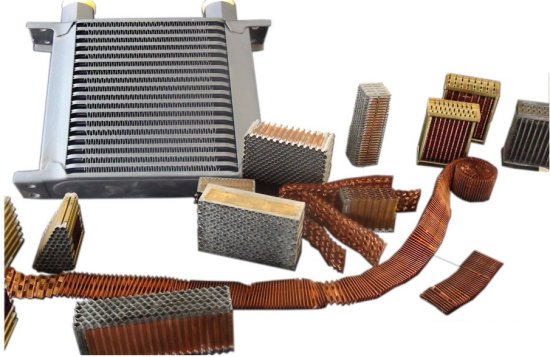
What really makes the radiator effective is not so much the size of the water tanks as the size of the mesh. While we're on the subject of the history of radiators, we should also mention the basic materials
that were used to make them in the past. It is brass, which, as is well known, consists of copper and zinc. The former material offers excellent thermal conductivity, although both have issues with their specific
weight (density).
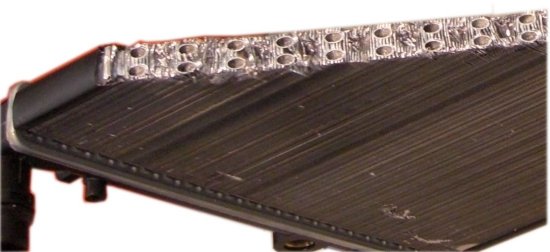
Check the cooler regularly and whenever the coolant temperature rises too high to ensure that air can flow freely. Here’s a look inside modern coolers. In the past, a lot of non-ferrous metal was used, which
gets its name from its copper content. But this weighs heavily, so that aluminum is the clear winner today. Although soldered connections are also available, as you can easily see in the picture, mechanical
clamp connections are becoming increasingly popular, especially for plastic water tanks, particularly when cost is a factor.
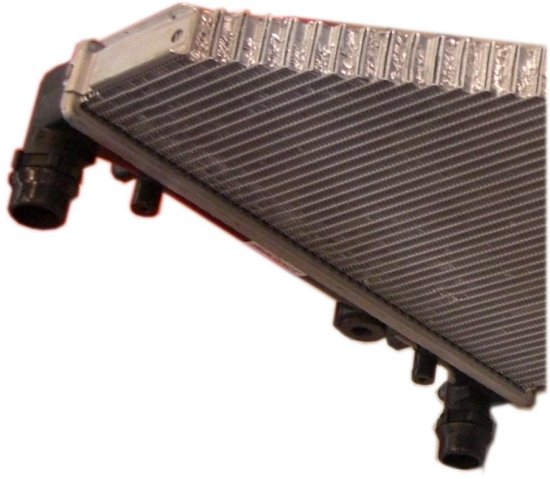
Fins are also needed to increase the surface area. They’re supposed to be only 0.1 millimeters thick, unbelievable. Here we can see a significantly more elongated cross-section of the flat tubes; although they
are more difficult to manufacture, they are arguably superior to the round tubes in terms of surface area to cross-sectional area. The best way to address issues with poor heat transfer is at the air inlet side.
But be careful. Slowing the airflow down any further will increase the vehicle's drag. Therefore, extending the path of the air through the radiator is only a partial solution. Slowing the flow of coolant through
potential obstructions is also problematic, as it increases the required pump capacity and reduces the ability to keep particles suspended in the coolant.
Never drive without a protective grille
in front of the radiator. |
|