Liquids/Gases
While solid bodies can transmit both pressure and traction forces, liquids and gases can transmit only the former. Since the incompressibility of liquids relative to solids is roughly the same as that of gases, and in rare
cases may even be higher, pressure forces are transmitted with virtually no delay. That is not the case with gases.
We explain the motion of celestial bodies in terms of gravitational forces between them. However, this also applies to the smallest particles. Thus, at a constant temperature, the molecules of a liquid always maintain the
same distance from one another. The distance between gas molecules depends on the available space for expansion. Gases are not held together by so-called cohesive forces.
Such cohesive forces (cohaerere - to stick together) are responsible for the cohesion of identical molecules within solid, liquid, or gaseous substances, while adhesive forces (adhaerere - to stick to) act on the surface of
molecules of other substances. Downward cohesive forces cause, for example, surface tension in liquids and adhesive forces at the liquid level, which rises toward the edge of the vessel.
Capillaries are tubes of the smallest possible diameter immersed in liquids, through which the liquid usually rises slightly on its own, as well as forming a raised surface edge. For example, when soft soldering two
copper tubes that fit together quite tightly, you only need to apply the liquid solder to the edge, and it will spread out on its own relatively evenly into the narrow gap between the two tubes, even if it has to rise upward to do
so.
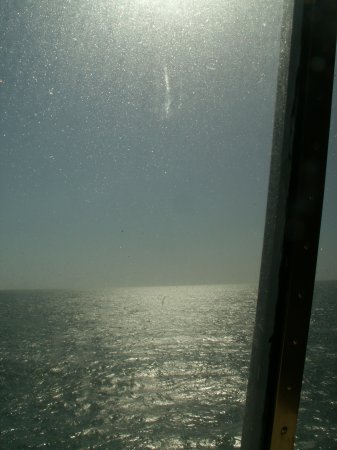
Anyone who perceives the horizon, for example, at the seashore, as perfectly straight must be made to understand that it is modeled after the curvature of the Earth. This is due to the gravitational pull exerted by each
individual particle of liquid, which is directed toward the center of the Earth. Theoretically speaking, even the surface of water in a glass is slightly curved.
Within an air conditioning system's cycle, only gaseous components are compressible. If, for example, the compressor comes into excessive contact with liquid components, there is a risk of severe damage. The
incompressibility of water can, under certain circumstances, be as great as that of steel. So now we'll focus only on the compressible part of the cycle.

The graph shows pressure as a function of temperature in an ideal gas. When the two are multiplied together, the result is the two rectangles, aligned with their respective upper-right points on the curve. The rectangles
always have the same areal content, no matter which point on the curve you choose. Below are the piston positions corresponding to the points.
When the compressor's pistons reduce the volume of gas by half, the pressure doubles (Boyle–Mariotte's law). However, when performing the calculation, we must not assume a temperature of 0° Celsius (32°
Fahrenheit); instead, we must always refer to the absolute values for pressure and temperature. So, going from 20°C (68°F) to 50°C (122°F) means multiplying the absolute pressure (gauge pressure + 1 bar) by (273+50)/
(273+20).

Pressure and temperature can each be used to influence the vibrations of molecules around a specific point. If the temperature rises, either due to external heating or due to pressure acting on a volume of gas, the
oscillations become stronger. By the way, the vibrational energy spreads evenly throughout the space after a relatively short time. You can measure the same pressure everywhere.
Pressure is defined as the force per unit area. It can therefore be expressed in N/cm² or N/m² instead of in Pa (Pascal) or bar. So, if the diameter of a compressor piston and the pressure are known, you can calculate the
force required to push the piston further in. By the way, it's the same regardless of whether the piston surface is ball-shaped or flat.
So one could also build a kind of compressor for the liquid system to provide the necessary circulation and pressure differentials there. However, the sealing and efficiency problems would be significantly greater. It would
be a kind of hydraulic press that works on a principle similar to that of a lift. However, this would still require the presence of gaseous elements in the cycle, because otherwise the pressure waves could cause destruction.
|