User Manual 4 User Manual 4
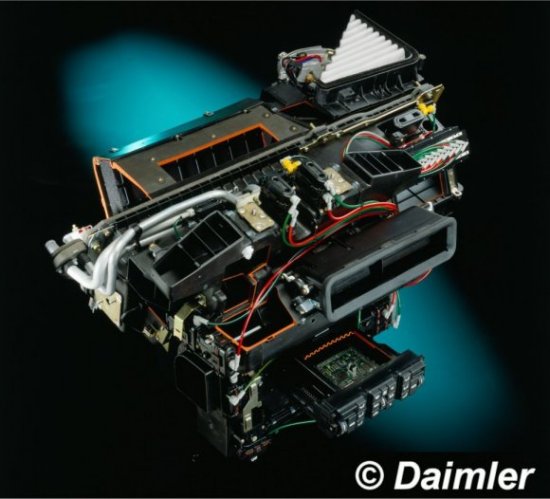
In the latest 4-zone climate control systems, 14 air streams - each with its own temperature setting - can be directed into the passenger compartment through 20 different air outlets. In fact, the entire intake
mechanism isn't all that different from other systems; it uses either filtered outside air or recirculated air.
In that case, however, activated carbon filtration is possible. It is said to keep harmful gases, certain odors, and the fine particles that are so dangerous to the lungs away. This filtration process also applies to
the recirculated air. However, the most important feature only becomes effective after the heating radiator and the evaporator have been passed through separately.
The air is mixed primarily based on the settings on the displays, where each person in the car can set their own temperature. Differences of, say, 3°C aren't a problem there, even if you're sitting next to or
behind each other. The continuously flowing air, which flows outward at the rear, makes it possible to generate airflows of varying intensities.
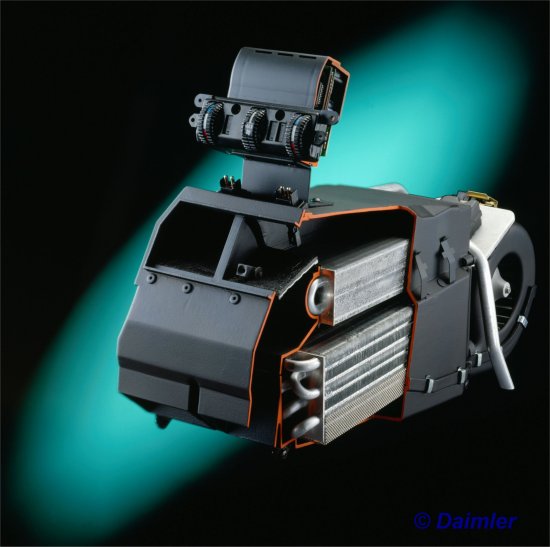
All the air can be conditioned in advance in the appropriately temperature-controlled form. However, additional air conditioning units with a rear control panel are also available. In fact, they don't even have to be
placed between the front seatbacks, excluding the control panel, of course, but can be hidden somewhere in the trunk or in the side panels.
The only thing that could really be a problem now is increased sunlight. A so-called four-quadrant solar sensor at the front transmits data on increased solar radiation to the control unit, which then adjusts the
temperature accordingly. The sensor has four quadrants so that it can determine the direction of the sunlight. This changes the air distribution to the individual vents at the seat.
Someone always has to go one better, in this case, Toyota with the extended Lexus version. Here, they go out of their way to take care of the passengers, especially those sitting in the back. If someone gets
in the back seat, the system is able to detect their temperature. If it differs from the setting at that location, the system is either heating or cooling intensively there.
Toyota doesn't make do with the 18 air vents found in other luxury vehicles. Here are two more that run along the inside of the roof and exit above the rear window. The seats have an even faster and more
significant effect on the temperature of the occupants. They become active before the air conditioner does and can both heat and cool.
|