|
| 
|
 Air conditioning - Requirements Air conditioning - Requirements
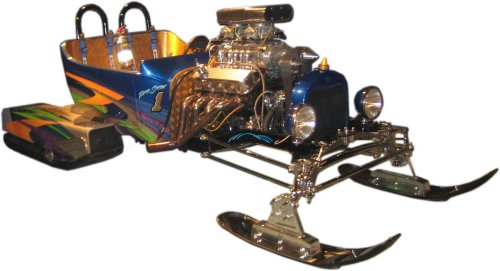
| Needs neither heating nor air conditioning. |
One should really start with Bernoulli, who discovered that when you blow between two loosely hanging sheets of paper, they move toward each other and not, as expected, away from each other. There are areas on the
vehicle that are subject to positive pressure and others that are subject to negative pressure. How strong and whether it is always distributed in this way can depend on the driving speed.
The former are naturally located at the front of the vehicle, which, for example, the first Mercedes models after the war used to supply the interior with long cables running past the engine (see History chapter). Today,
the most common design is a grille-like opening with the water tank underneath it in front of the windshield. However, the excess pressure depends on their inclination, which is why in modern vehicles with flat
windshields, the blower should run at the same speed.
For a long time, the C-pillar was considered a possible exit point, but later attention moved to the rear bumper. This does not change the fact that only through appropriate
air movement can heat or cold reach the interior and, for example, the rear seat(s). That may be recirculated air, but not for too long.
On the one hand, this sounds quite simple, because such airflows can now be regulated and directed with great precision, but on the other hand, such a vehicle is in motion and even opening a window while driving can
confuse everything. And then there are areas with special requirements, from the Arctic Circle to Death Valley.
Air conditioning is slowly becoming more and more important anyway, since electric mobility is becoming more widespread. It is one of the biggest factors limiting range. To heat the air to 20°C, you need
a good 0.4 kW, based on our average temperature of 13°C and an interior space of the same temperature. Of course, this is only a value based on the result of the heating, whereby the heat emitted to the outside through
exhaust air is not even taken into account.
If we assume 1 kW for all losses, e.g., from pumps and fans, then at 100 km/h this increases the consumption of an electric car from, for example, 19 to 20 kW/100 km. Conversely, cooling by the same temperature
difference would increase consumption even more significantly. As a workaround, many people set their air conditioning to 22°C and make greater use of seat and steering wheel heating in winter.
However, heating has long been mandatory because it is the only way to prevent the windows from fogging up in unfavorable situations. Hesitant at first, but gradually gaining momentum, is the electric windscreen heater.
Since we are already talking about the outer skin, painted roof surfaces must be considered more effective against heating up, although light colors are more effective than dark ones. Solar roofs could then play a role if
they were large-scale and comparable in terms of transparency.
And then there are the additional conditions, e.g. water that must be removed in winter by cooling and heating the incoming air. It should actually be removed beforehand, because it promotes mold growth, even in
combination with dry filters. Regelungen kommt eine immer größere Bedeutung zu. This would mean no longer cooling before heating as a matter of principle, but only as needed.
One question, for example, would be whether the electrical energy recovered through recuperation should be sent to a compressor tuned for higher performance in the short term, rather than being stored in a way that
slightly reduces efficiency. Of course, this is always balanced with the requirements set by the driver. Things get really complicated with the increasingly vehement demands for heat pumps. And if climate change continues
at this rate, even this will have to be taken into account at some point in the service life of today's cars.
After all, car manufacturing can obviously benefit from calculations relating to air conditioning in buildings. The water vapor content determined from the air temperature probably plays an even greater role here. After all,
estimating solar radiation is somewhat easier there than it is for cars. Of course, the ever-improving weather research helps with the calculation of air conditioning systems, for example.
And then there is the issue of managing the sometimes quite large volumes of air. Certain techniques are disruptive but necessary here, such as excluding small and large raindrops from the outset. And that has to
work at the highest support level as well. This takes energy, but removing it afterwards takes even more.
And as if that weren't enough, the coronavirus e.g. reminds us to be cautious about air currents in general. Who knows what sensor technology still needs to be developed in this regard, with the corresponding
consequences. And as if the warnings on American cars, for example, weren't bad enough, soon we'll probably be told not to touch the dashboard when getting into the car on hot days.
|
|