|
| 
|
 Carbon
| The material of choice, not only in Formula 1 |
kfz-tech.de/PKa58
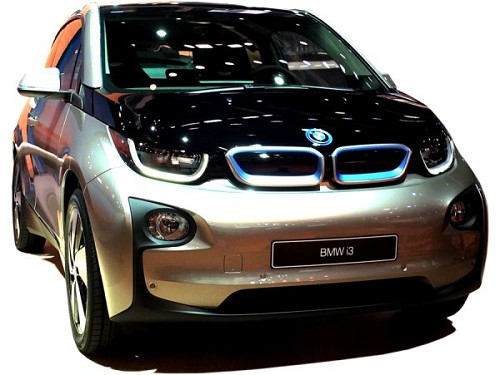
The BMW i3 was a top priority, not only was it produced in an innovative way, but it was also carefully planned. After all, cars with partially carbon-fiber bodies already existed, but how many of them were delivered each year?
You don't need to look any further, no manufacturer built enough car bodies to deliver 50,000 per year. This is unmatched in the field and, of course, carried a corresponding risk.
kfz-tech.de/PKa15
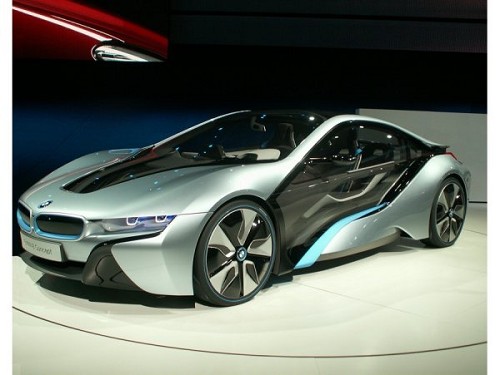
| The BMW i8, also a combination of carbon fiber and aluminum. |
Billions had already been invested before the first i3 was delivered in late 2013. You certainly couldn't accuse the company of lacking courage. And then there's the car itself. Even though there was the sporty i8, the i3
was created as a 4-meter sedan, even more compact than a current Golf. That may have highlighted the need to separate the i-models from the marketing strategy, since the traditional BMW audience could
probably only be partially successfully targeted with them.
Frameless front side windows prevented the front and rear doors from opening independently. After all, it has four doors, although the rear ones open forward. It was nice to have a little bit of that Rolls-Royce feeling,
especially without the distracting B-pillar. Unfortunately, however, the design wasn't as clever as, for example, the Ford B-Max , where the doors on one side could be opened completely independently of one another. It's
also a shame that the rear side windows are fixed. But apart from the massive sills, which were likely installed for stability and crash safety reasons, nothing stood in the way of reaching the seat.
The basic data was much more important, because it showed what a combination of carbon fiber and an electric powertrain is capable of. A curb weight of just over 1,200 kg was one factor that, together with very narrow
tires, compensated for the slightly insufficient battery capacity. Instead of 125 kW (170 PS), it may have actually been a bit less, although that didn't quite fit with the slower acceleration near the recommended highway
speed. The power was transmitted via a rear engine and rear-wheel drive. The weight distribution caused by the heavier batteries was more similar to that of a mid-engine configuration with an infinitely deep mounting.
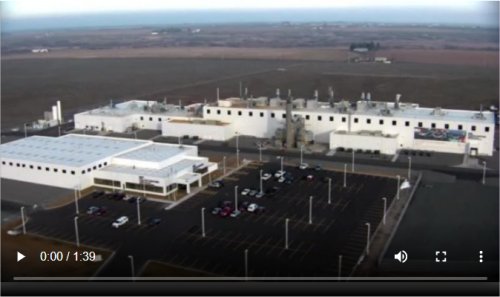
| 1. Moses Lake. Exterior shots. Aerial view of the SGL ACF plant building. SGL ACF logo
next to the entrance and on the office building. Various settings. |
kfz-tech.de/VKa1
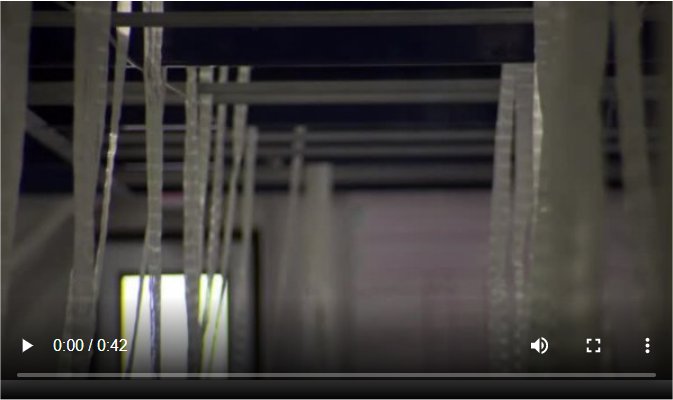
| 2. Production gate. Gate area. The precursor is pulled up. Various settings. The precursor is spread
out and laid in strips. |
kfz-tech.de/VKa2
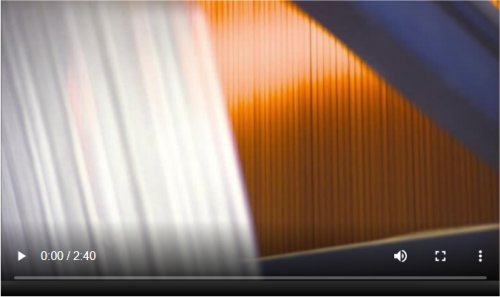
| 3. Oxidation furnaces. Production hall. White precursor. Oxidation stages of the precursor, from white
through gold, copper, and brown to black. Various settings. Winding machine. Winding the carbon threads. Supervisors walk past the oxidation furnaces. |
kfz-tech.de/VKa3
| 4. Low-temperature furnace |
kfz-tech.de/VKa4
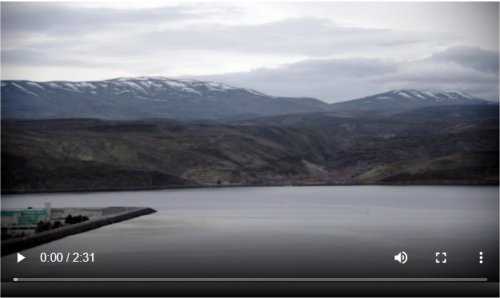
| 5. Wanapum and Priest Rapids Dams. Hydroelectric power plants. Aerial views of the Columbia River
and
the Wanapum Dam. Dam with open floodgates. |
kfz-tech.de/VKa5
| 6. Steve Swanson explains production: |
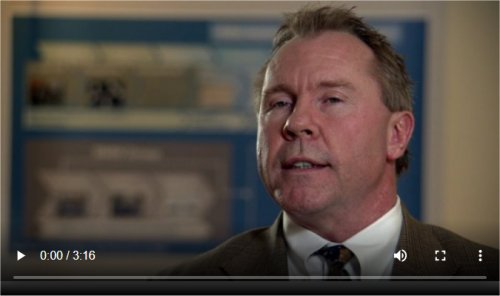
kfz-tech.de/VKa6
7. SGL ACF CFRP Production, Wackersdorf Plant.
Biaxial line, unwinding spools, spreading
filaments, forming plies, curing the fabric/applying binder, winding the fabric. The carbon fiber threads are unwound simultaneously from 90 to 560 spools, depending on the working width and basis weight; the thread is
guided around several round profiles, which increases the thread width. Carbon fiber and glass fiber layers are sewn together ("woven") into a fabric using sewing thread according to a defined sewing pattern; the sewing
thread is then shrunk by heat. Then the binder powder is applied; it is also heated so that the powder softens, adheres to the fabric, and partially penetrates it. The fabric is rolled onto a tube and, once the desired length is
reached, cut off. |
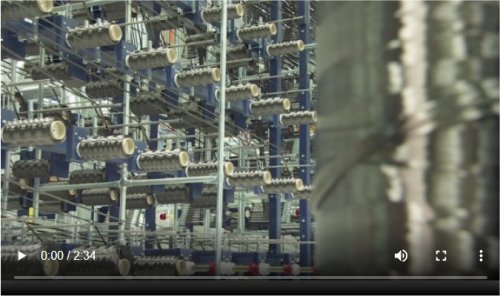
kfz-tech.de/VKa7
| 8. BMW i3 Production, Leipzig Plant. CFRP Production, Preform Line. Stacks (textile mats) are fed into
the preforming line, front view, close-up from the side. Stacks arrive at the line and are raised for preforming. A stack is taken and inserted. The component's geometry takes shape. Preformed parts are cut to size by a
robot. Preform tool: front, side, full view, and close-up. Finished preformed parts on the conveyor belt. Supervisors walk past the oxidation furnaces. |
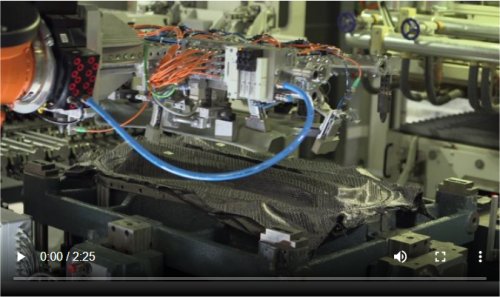
kfz-tech.de/VKa8
9. RTM Presse.
The preform is placed into the side frames. The gripper lowers onto the preform-
packaging table. Move the side frame from the pre-assembly table to the lower tool. The press lowers onto the component, with the mixing head positioned close by for resin injection. The gripper removes the finished side
frame from the mold. |
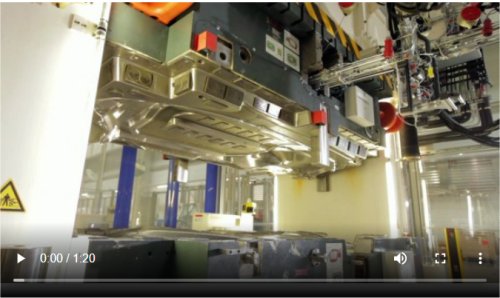
kfz-tech.de/VKa9
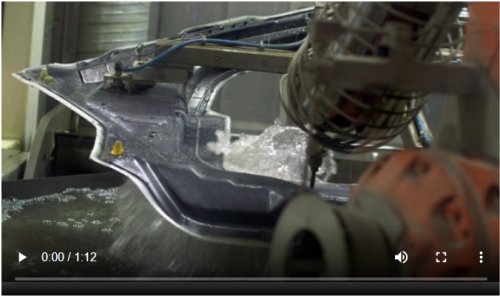
10. Waterjet Cutting.
The side frame enters the line. Various adjustments are made to the
cutting by robot. The finished, cut side frame leaves the line. |
kfz-tech.de/VKa10
15. Production BMW i3, Plant Landshut.
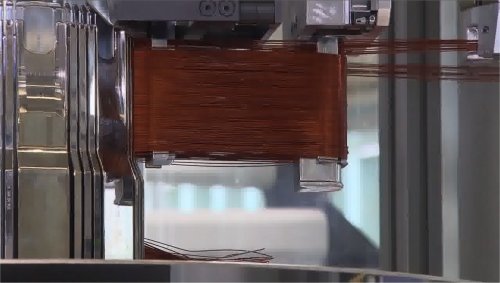
Electric motor.
Winding and drawing machine:
Copper wires are wound onto coils. Pressing: Shaping the stator / Expander: The coil is pushed apart. Bandaging machine: The spools are secured. Electric-Heat-UV Impregnation: Resin Dipping. Rotor Manufacturing: 6
sheet metal segments, each containing 12 small and 12 large magnets are inserted. Support discs are assembled. Final assembly: The motor is mounted on the workpiece carrier. The power electronics are bolted to the
motor. The motor number is engraved. |
kfz-tech.de/VKa12
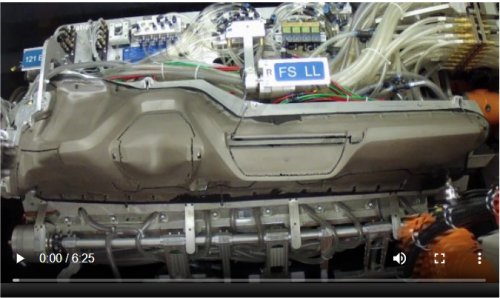
16. Cockpit.
Thermoforming: The film is fed into the machine, stretched, heated, and die-cut.
Back-foaming: Foam is applied by a robot. The backing and plastic film are bonded together, resulting in a softer surface. Milling station: A robot mills the support piece to size. Adhesive is applied to the leather and support
pieces. Press lamination: Adhesive is heated, and then the leather is pressed onto it. Infrared welding. Assembly: The cockpit is installed, the attachment parts are screwed in place, and the cockpit is inspected. |
kfz-tech.de/VKa13
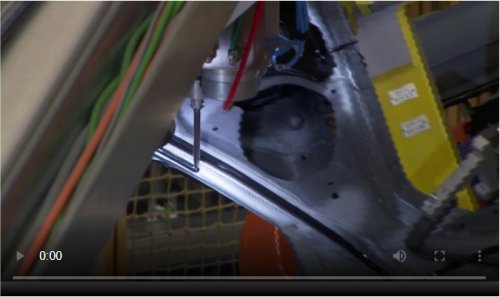
17. Production, Leipzig Plant - Body construction.
BMW i production. CFK production SGL
Automotive Carbon Fibers, Plant Moses Lake. Main Body Frame Line: Attaching side frames (right, left) to the floor assembly. Clean and glue. Side frame. Cleaning. Assembling additional components. Test bench. |
18. TEK - Exterior Component Technology
Injection molding machine (plastic pellets are
melted). The material is injected and molded. The frame and outer shell
are glued together. Flame treatment. Injection molding machine. Components are placed on skids. Preparation for the paint shop. CO2 system: Surface cleaning. Flame treatment. Primer. Base paint. Clear paint. |
kfz-tech.de/VKa14
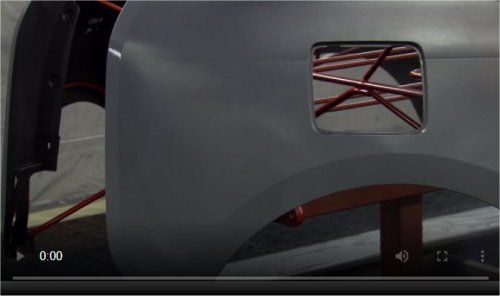
19. Assembly
Production hall. Various shots of the car body. Roof assembly.
Roof installation. Installation of door and window mechanisms; various adjustments. Installation
Interior mechanisms, various adjustments. Trunk door installation. Assembly of the floor. Installation of the electric motor. Production line, various adjustments. Installation of the electric motor / internal mechanics, various
adjustments. Body completion/inspection, final assembly. |
kfz-tech.de/VKa15
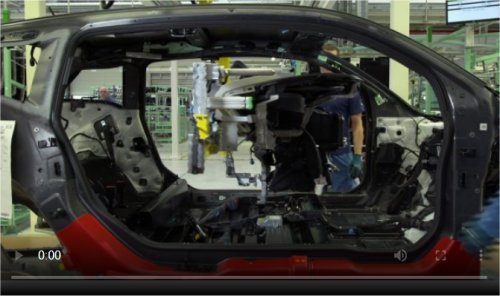
20. Final Assembly
Production Process: Final Assembly. General Inspection. |
kfz-tech.de/VKa16
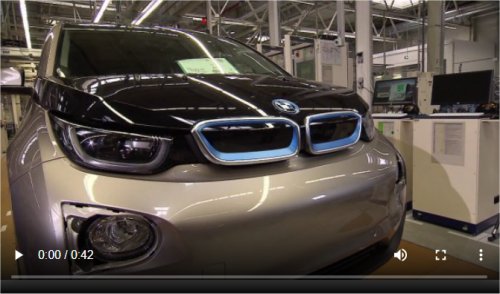
| 21. Exterior shots of the Leipzig plant |
kfz-tech.de/VKa17
kfz-tech.de/PKa16
kfz-tech.de/PKa17
kfz-tech.de/PKa18
kfz-tech.de/PKa19
kfz-tech.de/PKa20
kfz-tech.de/YKa9
kfz-tech.de/YKa10
|
|