Column gear shift
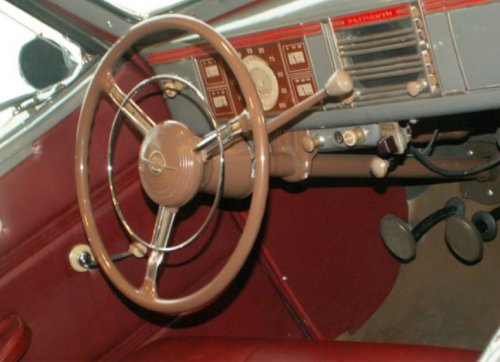
| 1939er Plymouth Convertible Coupé |
No, there was never a steering wheel shifter with six gears. As far as we know, not with five either, but we should be careful because three shift gates were quite normal later on.
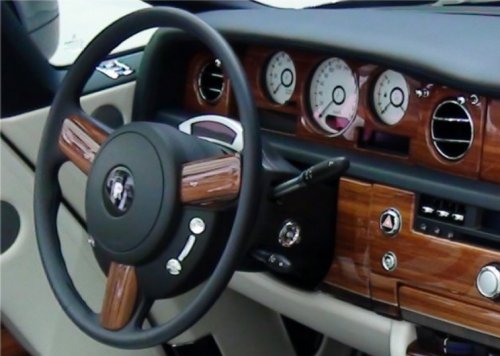
kfz-tech.de/PGt5
However, the column gear shift started its career with two shift gates, namely with three gears to choose from. Then the first near the steering wheel down and the second in the same plane up was reverse gear.
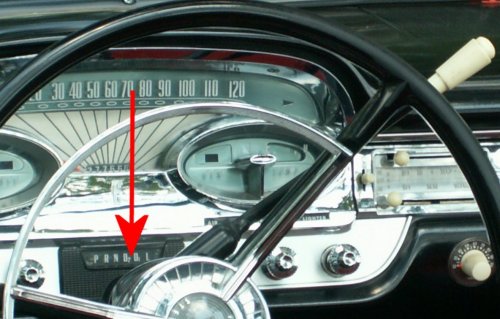
| Shift indicator in the dashboard - Ford Edsel |
With three shift levels, the reverse gear was the only one left in its level. Operating automatic transmissions was much easier because all the options were on one level, one behind the other. But even with manual
transmissions, a somewhat thinner shaft compared to the steering column is sufficient, from the shift lever displaced longitudinally between the different shift lanes and twisted accordingly for gear selection.
| Here a connection to the transmission via linkage . . . |
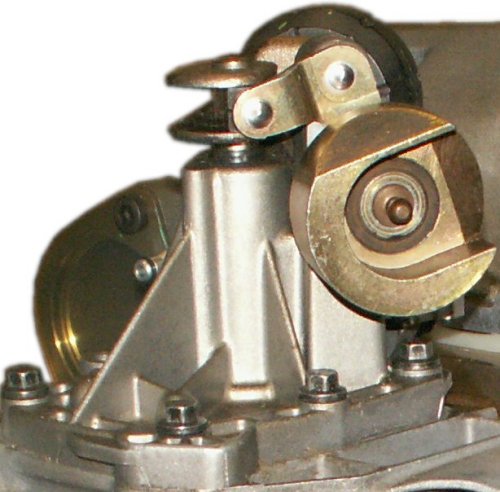
At the lower end, both movements are usually transmitted to a linkage or, more rarely, to Bowden cables. This actually works quite precisely if it weren't for the longer shift travel compared to a sporty middle shifting. The most
important advantage was probably the possibility of a bench seat for three people in the front. It was also easier to change places. All this disappeared at the latest with the advent of three-point seat belts.
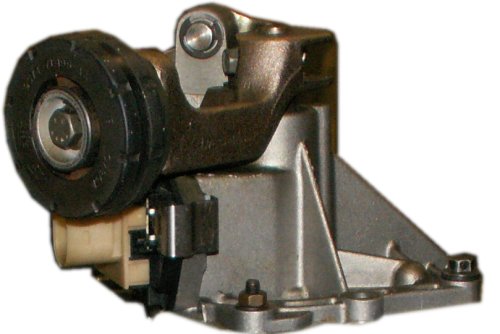
With the disappearance of the seat ben ch, the steering wheel gearshift became rarer too. At the latest, the multiple adjustment options of today's steering systems would have put an end to it anyway.
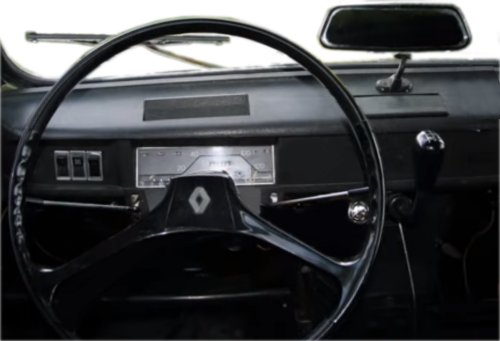
What remains is the so-called 'cane shift'. You can see it in the picture above, the is also very close to the steering wheel. At least with the 2CV and here with the R4 it actually works according to the H scheme, but it has
sometimes caused perplexity. It is ingeniously simple in design.
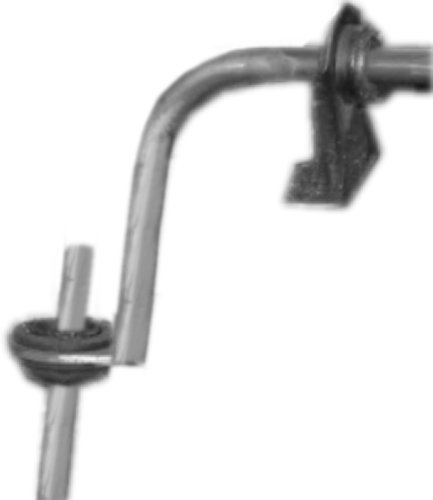
In the R4, the gearbox is positioned in front of the engine. The shift lever coming from below in the picture protrudes from it. The cane now accesses the motor via the motor. Incidentally, the first R4s with only three gears,
despite the gearbox, were started with a crank through a hole in the bumper.
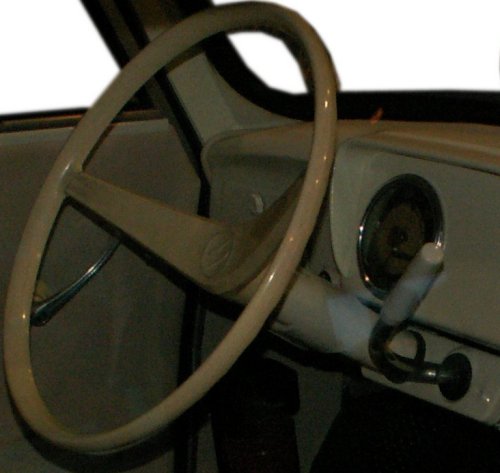
Here a kind of cane of even older origin, namely from the days of the DKW. The picture is of course from a Trabant from Sachsenring. Compared to the Renault circuit, there is also an H pattern here, only the first gear is down
towards the dashboard, the second is upstairs and the third and fourth gear towards the steering wheel. For reversing you have to press hard because of a lock and also down.
Video 1: kfz-tech.de/YGt1
Video 2: kfz-tech.de/YGt2
|