Convert from 6V to 12V Convert from 6V to 12V
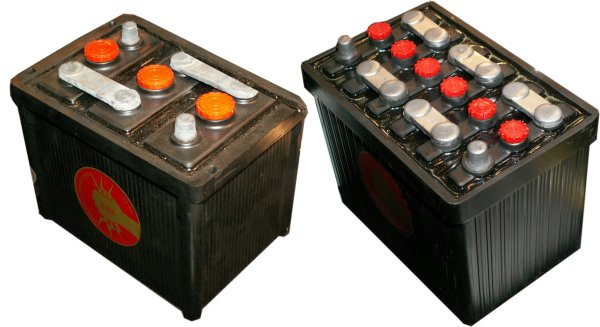
Vehicles with 6V electrical systems were manufactured for a very long time. The Fiat 500 received a 12-volt system as early as 1957, whereas the VW Beetle did not get it until ten years later, and, of course,
the Type 2 along with it. An Australian walked into a VW dealership and asked how much it would cost to convert his VW bus to 12 volts. They calculated carefully. When the man heard the price, he got into
his car and drove away.
What exactly makes the reconstruction so expensive? It's definitely not the cables, because they're staying in place. Don't swap them out, apart from being a little heavier, the larger cross-sections offer nothing but
advantages. Despite the lower current, it seems the fuses can be kept, too.
There are only eight fuses, for example, in the 1964 Beetle, but they should be treated like road signs so you don’t forget anything before connecting the 12V battery and, for example, turning on the lights.
So this applies not only to turn signals including relays, parking lights, low beams, high beams, and interior lights, but also to small details such as the lighting and indicator lights in the speedometer and other
instruments on the dashboard.
If we consider the driving lights on their own, a closer look reveals that the 12V bulbs provide significantly brighter illumination, especially in older vehicles with higher transition resistances. The benefits are even
greater during cold starts in winter. Strangely enough, however, it is reported that the aforementioned Fiat, despite having a 12V system, still cannot start at all at -25°C.
But as a general rule, 12 volts is still a better guarantee at such temperatures, the larger the capacity, the more power it delivers. Thanks to today's three-phase generators, we don't even think about it
anymore. However, the switch from 6 to 12 volts affected DC alternators, and those were indeed designed to be far too underpowered.
As mentioned, if it said 150 W, that was the peak power, but that wasn't actually reached, for example, during city driving at low engine speeds. An increase was particularly welcome in order to prevent
a situation where, at some point, you might find yourself with a dead battery even though there was no defect whatsoever.
In addition, the device was even lighter because the windings required cables with smaller cross-sections. It’s important to keep in mind just how little electrical energy was required back then compared
to today. These days, such a change would be almost unthinkable. That is another reason why the 48V system is making little headway.
So you replace the generator; in the VW Beetle, due to the special installation position, this is only possible with VW parts, but otherwise it can be replaced as an add-on part without problems. If you were
to do this on a classic car with a three-phase generator, even changing the direction of rotation wouldn't be a problem-you'd just have to replace the fan.
If the regulator on the DC alternator were also replaced, we could then turn our attention to the biggest problem: the starter. The new unit itself could - hopefully - be installed in place of the old one
by mounting it to the flange, but there’s a chance it might be smashed to pieces when the engine starts up.
That's because the flywheel flange has to match the starter flange, not only in terms of the engine speed to be achieved, but also because of what's known as the E-module. It must therefore be ensured
with absolute certainty that the teeth of the one fit into the gaps of the other.
Some people claim that you can leave the old starter motor in place. Smart people only use it briefly anyway and don't spend ten minutes fiddling with it. Then maybe even a starter that's a 100 percent
perfect match is broken. At the very least, the hold-in winding inside the solenoid could also be at risk.
What perhaps not everyone knows is that, by skillfully applying heat versus cooling, you can replace just the gear ring on the flywheel, and only that part. It goes without saying that when performing
maintenance work on the alternator and starter motor, you should inspect and replace various ground cables that are prone to wear.
And then comes the fine-tuning. Is there a working current relay for the starter or solenoid switch to protect the ignition switch, or are there even any 6V relays anywhere at all, e.g., for switching from low
beams to high beams? On the engine, inspect the ignition coil, the automatic starter, and any idle shut-off valve. And then there's the horn, which may also have a relay to protect the button.
Also make sure to include (retrofitted) hazard lights and, of course, the heated rear window, which may be aided by a series resistor or even an electronic circuit. The windshield wiper motor is
very important and expensive to replace if it breaks. Then there are still the existing fans in the ventilation or heating system.
Are we done now? Of course not, because we still need to check the radio and any other additional equipment, fortunately, there isn't much of it in 6V vehicles. But there's one thing that makes sense,
namely why the Australian took off as soon as the prize was mentioned.
|