Summary 1 Summary 1
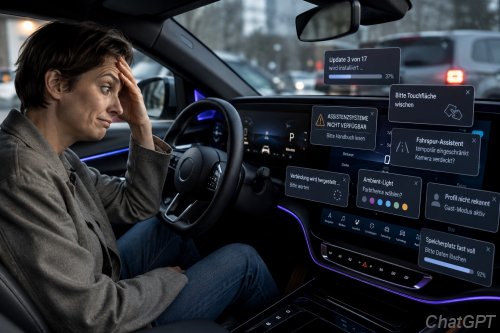
We've heard so much so far about the software-based or software-defined car that it might be time for a preliminary conclusion. The basic point is that there are still vehicles being sold
where, once the fundamental decision has been made to choose between a combustion engine, a plug-in hybrid, or a fully electric powertrain, appearance and feeling play the most important
role. Perhaps the Chinese prefer to think of the car as a living room because they aren't used to having quite as much space at home as we are, but for us, it remains a car whose primary
purpose is to enhance the driving experience. We certainly have fewer megacities, and a little less traffic congestion there.
However, the way we develop our cars has changed. While there had already been some software in our cars to a limited extent, its importance has increased significantly, which has led to the
involvement of a different category of developers. It is even said to have changed the mistrust that newcomers often face, which culminated in the phrase: 'That's how we've always done it.'
However, it seems that initially it was believed that the newly added software was not quite as important for operational safety and was therefore not viewed as critically by customers. That turned out
to be a mistake. After all, the customer has to deal with the added software every day, so the frustration may have been even greater than it would have been with a defect that doesn't occur quite as often.
VW has learned the hard way about this issue during the debate over missing buttons.
It's also much easier to publish any criticism these days than it used to be. Perhaps we should include social media when discussing software-based cars. They are sold in a completely transformed
environment. Added to this is the trend of wanting to own or drive a car only for a certain period of time. This has increased dramatically, and it can't be explained solely by the fact that people may have
less money available to pay for a new car in cash.
No, it's the massive expansion of testing. In the past, people were bound to a car they’d bought on a whim because it depreciated so much that they didn’t want to part with it without incurring significant
losses. It was moving, after all, so people resigned themselves to their fate. That has changed dramatically since, for example, it’s supposedly become the norm even in home sales: the condition doesn’t
matter; the new owner will change everything anyway.
No, with a car you simply part ways, especially since the return value is determined from the start, quite apart from any inspection upon return. That's a changed relationship with the car. You do take great
care, because every incident is no longer just recorded by the TÜV, but can even be read down to the last euro and cent after the leasing time, but a really kind of genuine affection just doesn't happen anymore.
It's more like you've borrowed the car.
Back to the topic. Does the faster transition have anything to do with the fact that it's software-based? To do this, we need to take two phenomena into account. It seems that improving the software through
over-the-air updates hasn't worked out quite as originally envisioned in all cases. Even Tesla, the pioneer of this technology, has struggled with hardware requirements that have increased rapidly over the
years.
Because you can't just replace them that easily. As a result, some software improvements are limited to newer vehicles. And some manufacturers still require a visit to the repair shop to perform the update.
No, the consolidation of all software onto a small number of control units, a prerequisite for successful over-the-air updates, is still far from being realized by all manufacturers and in all their products.
It all took much longer than anyone had expected. It's probably still not entirely clear how best to go about making the necessary changes. Is it better to form a huge team within a completely new company,
or does having too many programmers in one place tend to be counterproductive and difficult to coordinate? Or is it best to work with a company that has already proven its success? It seems that VW is
pursuing at least two of the three paths at the same time.
The automotive industry had all sorts of plans. The aim was to build long-term brand loyalty among customers. What remains is the inspection marathon, which then
soon had to be extended to at least two years or 30,000 km, although it now definitely doesn't align with the TÜV inspection cycles. The only thing that seems to work is the semi-annual tire change,
although the pressure sensors in the wheels have put an end to changing tires on your own.
No, the long-term commitment to the mobility guarantee was only fulfilled with the introduction of high-voltage batteries for dealers and manufacturers. That has little to do with the software-based car.
However, it has since become clear that it is not so much the battery itself as the electronics surrounding it that require such protection. There are already manufacturers who have realized this and, while
they offer the protection for free, are now keeping customers tied to the repair shop for even longer.
And yet, the original plan had actually been to offer customers an even more frequent shopping experience. The intention was, and in some cases this has already been done, to offer certain additional
features in exchange for a kind of 'rental fee'. A harmless example would be using the features of a navigation system only during vacation time, perhaps even more practical for electric cars than for
internal combustion engine vehicles. Unfortunately, there is still one old problem and one new problem standing in the way of further expansion.
As mentioned earlier, certain software versions are only compatible with specific hardware. So, like it or not, you can't always offer customers the latest product. Even worse than the current situation with
this issue is the fact that all vehicles delivered must have these rental-ready capabilities, especially the hardware, on board, regardless of whether they are ever used or not. The chaos becomes almost
impossible to ignore when the vehicles change the owner(s).
|