The Future of AI 2
kfz-tech.de/YSD32
Here, then, is an attempt to reach out more to people who are keeping an eye on the latest developments in AI and are also thinking about the future of AI. By the way, that seems to be the most difficult part of
the whole topic.
This has something to do with what's known as "progressive escalation," which doesn't quite fit into our human brains. And if you try to solve this by using a logarithmic scale in the diagram, it doesn't get any
better.
That would create a straight line, but that would obscure things even more. Professional explainers use the term 'doubling'. So imagine that one kilometer is followed by two, then four, then eight, and so on.
So where would you be after 20 doublings?
They're probably underestimating it, because we're already far beyond the moon, we would have more than reached it after just 19 doublings. Even more errors occur if you prescribe the 20 doublings. Then
people might report 1,000 km, but certainly not more than 400,000 km.
That is the dilemma of AI: it is evolving at a pace that is faster than the human brain can comprehend. And then there are people who believe that text, images, and videos represent the entire spectrum of
human experience.
In addition, there are those, as described in the previous chapter, who do not believe this, but at the same time do not attribute any further capabilities to AI and therefore argue that it would not pose a threat,
for example, to working people.
But it does, when we're told just how quickly an AI can do something that would take more than one employee, say, a year, to complete. It is already conceivable today that there could be companies
consisting, in principle, of only one boss and AI agents, for example in tax consulting, provided it is legally permissible.
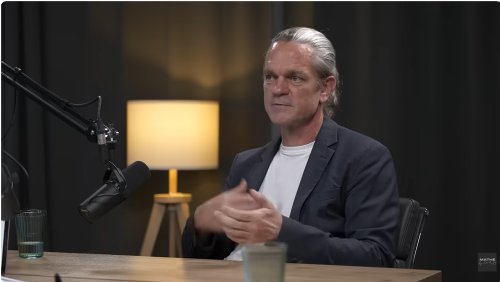
We're experiencing firsthand how AI helps us every day. However, it can also cause a lot of confusion. In computer science courses, for example, Professor Bauckhage (video below) reports that last semester
he allowed students to use AI to complete their assignments, and that they are actually doing so.
Result: All the problems have been solved correctly; there's basically nothing left for him and his colleagues to correct. However, the exam results are significantly worse. There is reason to fear that the
sstudents do not always know what the AI has done.
For computer science professor Bauckhage, the despair over the release of AI is almost written all over his face. Students are allowed to use AI to help with their assignments. Is it still worth checking those?
Students perform significantly worse on written exams. How can there even be meaningful exams for bachelor’s or master’s degrees anymore? How many graduates are actually still needed? What will the
process of earning a doctorate look like in the future?
Isn't it enough that a task has been completed and the answer serves its purpose on tests? Bauckhage is right to say no. Take a look at how remarkably he describes the role of, for example, a programmer,
how he envisions that person.
|