Autonomous driving 4 Autonomous driving 4
Professor Eckstein from RWTH Aachen University used this sketch to outline the contents of the new project. Funding for this was released by the Federal Ministry of Research, Technology, and Space in 2022.
It is the successor project to UNICAR.agil. There, the architecture for driverless vehicles was researched and developed. At autotech.agil, the number of project partners grew to 27. UNICAR.agil had
provided the basis for this. This laid the foundation for expansion to the entire transport system.
The new claim is already clear from the sketch. The digital twin (digital city twin) at the top center of the sketch is central to this. This refers to a digital, detailed representation of a
physical system, product, or process.
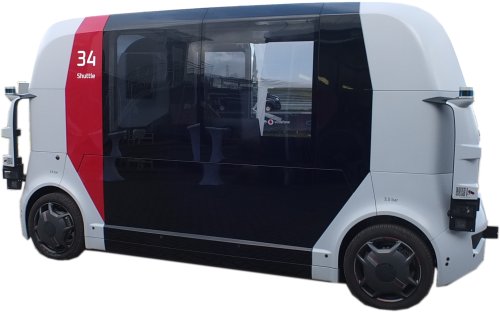
You can see the division of tasks on the left for passenger transport and on the right for freight transport. The left-hand section will then not only register self-driving shuttles (picture above), but also pedestrians,
cyclists, self-driving cars, and traffic control systems.
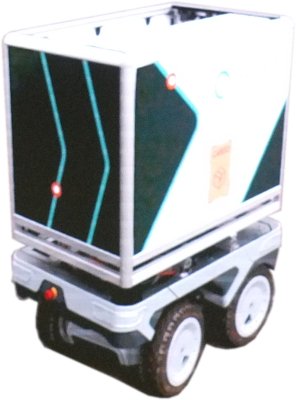
The cargo side is represented here by a small cart in the image above, loaded from a cargo shuttle. At the closing event, an automatic device took over this task. It then automatically finds its way to the delivery address.
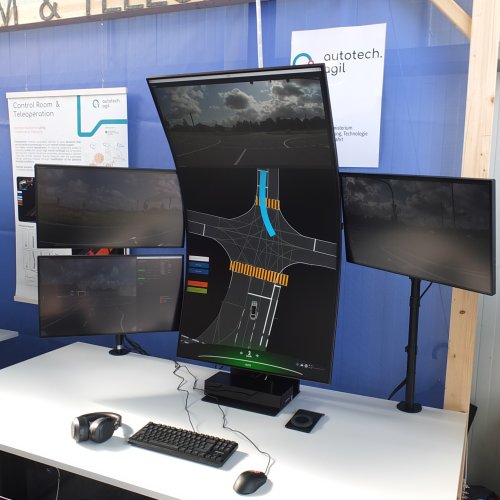
Obviously, it is a summary of all events and circumstances relevant to road traffic, a computer-based representation of traffic. This then plans the movements of virtually every single road user, so to speak.
Here is the temporary setup of a small part of the headquarters at the closing event. At the top of the list on the right-hand side of the image is 'Resilient encrypted communication'. It shows a list of modules on how to
protect yourself from unauthorized interference in the entire procedure.
As a visitor, one gets the impression that the second project focused much more on software. The term 'open source' appears very frequently. Once again, this also concerns Linux, which appears to be growing in
importance for the mobility sector.
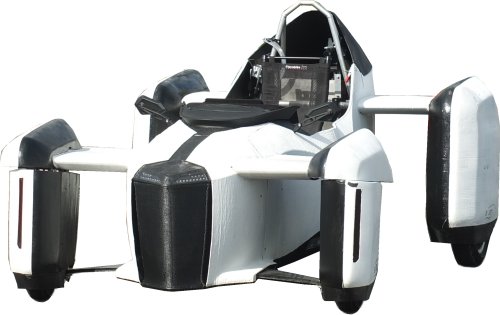
Sustainability also plays a role, of course. Above, you can see a vehicle that is so lightweight and aerodynamic that it can be propelled by muscle power alone. The technology used in e-bikes would probably also be
applicable here.
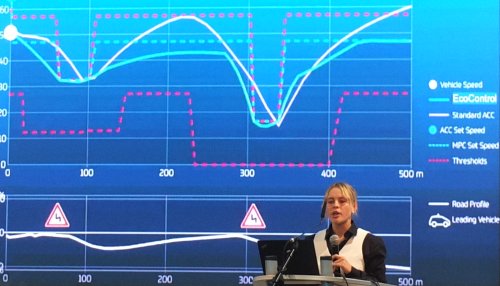
The image gives an impression of how deeply one intends to intervene in the physics of the vehicle, here using the example of speed control. One can already get an impression of how strictly a poorly programmed
computer insists on compliance.
The connection to the inmates also appears to require significant expansion. It actually has to be that way, because permission to open the doors can't be granted everywhere. We still have a lot to deal with, as can be seen
at the moment with the rescue of passengers from stranded ICEs.
However, one rule that emerged from the experiments seems particularly sensible. It was about an accident to which an ambulance was responding. At the same time, however, the software also took care of a shuttle that
could have blocked the ambulance's path.
|