|
| 
|
 1972 BMW 5 Series 1972 BMW 5 Series
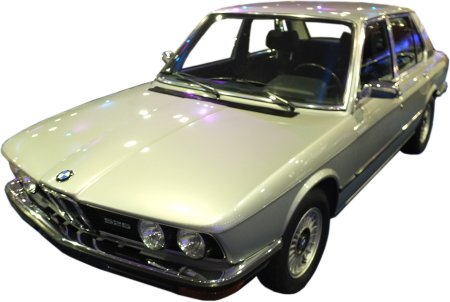
BMW 520 (E 12) 1.990 cm3 (89,0 * 80,0), R4, 9,5 : 1, OHC, 2 SU carburetor162 Nm 3700 rpm, 85 kW (115 HP) 5800 rpm, 4/5-speed (3-step automatic)), McPherson, semi-trailing arm,
Discs/drums, front ventilated, power-assisted, hydraulic, 175 HR 14 (5,5“), 4,62/2,64/1,69/1,43 m, tank 55/70 l, 1.270 (430) kg, 175 km/h, from 14.500 DM, 1972-1981
BMW 520i 9,0 : 1, mechanical gasoline injection, 178 Nm 4500 rpm, 96 kW (130 HP) 5800 rpm, 1.290 (410) kg, 175 km/h, from 15.700 DM
Why was the 5 Series the first to appear? Because it was the (much-needed) replacement for the 1800/2000. After all, they were more or less identical in design to the 1500 from 1963. The
5 Series represented the mid-range model line for a very long time. Space had been deliberately left for the 3 Series, which later replaced the 02 Series.
People weren't particularly excited about the engines or, say, the drive train. This series of models got its start with a great deal of expertise for the time, and consequently requires very little
maintenance. You could already guess which two engine versions would be available, as well as their power output. Back then, there wasn't much you could do to adjust the cW value, so
the top speed wouldn't change much either. People were already satisfied if it stayed that way.
As for acceleration, one were also prepared for the car to be heavier. A compromise had to be found between offering more space and BMW's signature compact design. That's no easy task, since the future 3 Series
would still have to be positioned below it.
Not only was the first 5 Series a sales success, but even today's viewers are filled with a sense of delight at the sight of its exterior design. Nothing disturbs the eye. However, upon closer inspection, the front hood, which
protrudes at the waist due to its trapezoidal shape, and especially the so-called 'Hofmeister kink' were already present on the 1500 model.
It even needed little chrome frames around the lights to hide its simplicity. This is where the next 3 Series fell short, because even less effort was simply not enough for a car in this price range. The trunk lid didn't open very
far backward, but it opened high enough to provide plenty of space. From the bottom center, starting at this point, a tool container.
When discussing the car's exterior, one cannot help but praise the significantly improved safety of the body compared to its predecessor. This is particularly evident in the improved crash performance, greater lateral
stability, and enhanced safety in the event of a rollover. Of course, airbags don't exist yet, but there are impact absorbers and a safer steering column. The best way to see the improved safety features is to look at how
relatively complicated it is to open the hood and its safety catch mechanism.
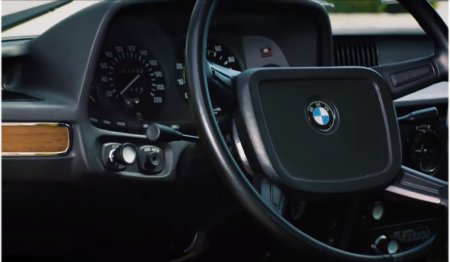
Once inside the car, you couldn't help but notice not only the optional steering wheel, which could even be adjusted lengthwise, but also the instrument cluster behind it, which will likely never again reach a size like that in
relation to the steering wheel's diameter. Unfortunately, the 520 had a clock installed instead of a tachometer. The orange lighting was also a point of contention. Air circulation inside the cabin has also been improved,
thanks in part to large vents located immediately behind the Hofmeister kink.
Yeah, yeah, the prices, a little less annoying than they are today, but still. The fact that a premium car like that came standard with crumb glass and static seat belts was quite a stunt. That made you wonder whether there
might have been something less important to do without, or something that would have cost extra. In general, the prices being asked required a strong brand awareness, especially since prices were often compared
based on engine displacement back then.s
|
|