Data Data

If the much-cited example is really true, that a department store chain knew that a young woman was pregnant before she did by analyzing purchase data, then that really explains the recent euphoria surrounding data
protection. However, most other examples are rather vague and not very convincing. In addition, everyone demands more data protection, but few adhere to it in their private lives.
Let us briefly digress from our main topic and consider, for example, a former Stasi agent who is currently bugging an apartment. This poses a fundamental threat to data protection. It
creates evidence that can be used in court to send people to prison. Even worse were close friends who turned out to be Stasi agents.
But what does that have to do with our topic? Autonomous driving involves driving data being transmitted between vehicles or to a fixed external point. Here is a compiled example of how the disclosure of driving data could
be dangerous for a private individual. Imagine that a violent crime occurs in a certain place and you happened to be there.
We can keep the explanation brief: no perpetrator could be identified, and you just happened to be there. Through systematic searches (grid searches) conducted by location and time, you are shortlisted, and surprisingly,
in practice, the burden of proof is reversed. You will be asked for an alibi, and woe betide you if no one can confirm your harmless activities in the town.
Admittedly, this example of driving data analysis is very specific, because dragnet investigations are subject to fairly strict conditions. So the question remains: do the data collected and received during the journey have any
added value? What is meant is one that can be converted into hard cash.
Google seems to have fully understood how to maximize profits through data collection, as evidenced by its enormous profits. Anyone who, like us, has a lot to do with translations will quickly realize that the remarkable
speed with which they are produced has more to do with data comparison and less with the application of grammar, for example. And with each new translation, the treasure trove of data grows larger.
You are even encouraged to make corrections on the Google website itself and, if possible, to join the translator community. However, the resulting revenues are so obscured that it is impossible to determine them
individually. The translator page itself does not contain any advertising.
As much as data protection is a buzzword, there must be something in it in terms of earning potential. However, if you look at eBay or even Amazon, it's clear that normal intelligence is in short supply,
and artificial intelligence too. If you have just bought a sofa, you will be offered sofas; it could be similar with cars. The tip of the iceberg is when your own books are offered for sale.
Nevertheless, the basic premise remains valid if, for example, a school discovers that a student can earn 50 cents for every complete data set of a classmate. But the same applies in reverse. If a renowned newspaper
needs specific statistical data, the Federal Statistical Office, for example, is responsible for providing it. Processing inquiries is usually free of charge, but not if it is more complex.
Data can therefore cost money. This will obviously also be the case for certain individuals who access autonomous vehicles via Car2X. Not huge amounts, but worthwhile given the number of vehicles keen to learn. But
how are such small amounts billed? You will have heard of Bitcoins, one of around 650 internet currencies now in existence. Someone buys bread rolls and just holds their smartphone over the counter to scan the
amount.
So there must be a well-encrypted wallet on the smartphone, also known as a digital wallet, from which the amount is debited during the transaction. And just like with a real wallet, if you lose it, your assets are gone. The
transaction described is then also expected to take place when receiving chargeable data, e.g., special weather or topography maps, only less complex and fully automatic.
So there is no need for a bank or a transfer, even if it has to go to the other end of the world. To prevent fraud and the unjustified multiplication of bitcoins, the transaction must be approved by so-called 'miners'. In principle,
anyone in the Bitcoin network with the appropriate software can do this. The miner receives a small amount of money for the professional processing, which is fully automated.
You can imagine that there is an incredible amount of transactions just within the Bitcoin community. Clever people have therefore built up enormous computer capacities in countries with cheap electricity, such as Iceland,
and are profiting from the difference between transaction proceeds and electricity costs or computer depreciation.
For verification purposes, there is an electronic description of the transaction. Of course, in addition to the amount, this does not contain the personal data of the payer and recipient, but rather their codes, which initially
opened the door to criminals and tax evaders and gave Bitcoin a bad reputation. Incidentally, the enormous energy consumption for the total number of transactions also contributes to this. However, one would have to
factor in the consumption of banks.
As you can imagine, no one is allowed to change the transactions, because this could lead to uncovered transfers being permitted, for example, and thus cause the system to collapse. Although the entire
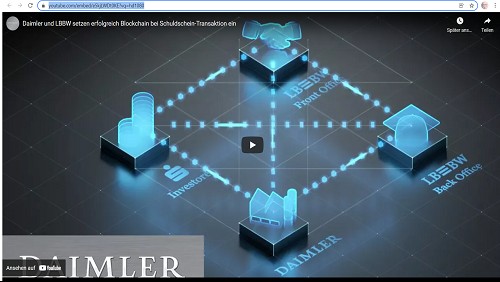
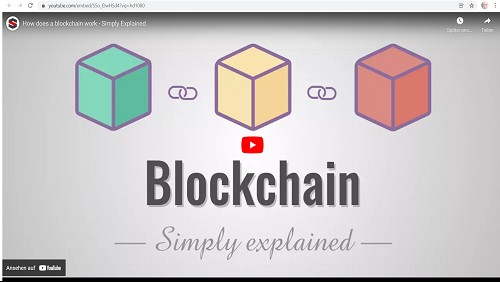
code is completely open, similar to Linux, for example, there are still very complex and effective protection mechanisms in place. Among other things, the transactions are bundled into blocks and linked together, which
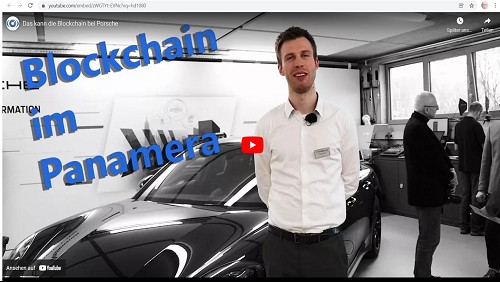
gives rise to the term 'blockchain'. These electronic locks would therefore have to be cracked before any changes could be made to the actual transactions.
Quite a lot of effort for what may be slightly safer autonomous driving. But don't worry, you won't notice nothing. While owners of electric cars will benefit from reduced charging costs, others may also enjoy an advantage
when purchasing parking tickets. Following on from the example with the school, data collected from your car also has value. There is official talk that this data could be remunerated with Internet money.
Before you shake your head, here is one possible application. Nowadays, it is common to purchase a certain number of maintenance services together with the car. Or you pay a monthly fee and maintenance is free. Since
there are now several providers of inspections for new vehicles, you as the buyer can choose one. He will give you a certain discount if he is allowed to continuously examine your vehicle's data and thus take over its
technical monitoring. Here, permission to access data means customer loyalty, possibly for a long time.
With autonomous cars, it is possible that they could easily fall out of sight because everyone uses them, but no one feels responsible for their technical condition, as is usually the case with cars today. In this case, it may
well make sense to refer the observation of technical defects to a repair shop.
kfz-tech.de/YAu11
kfz-tech.de/YAu12
kfz-tech.de/YAu13
|