Range Rover 2 Range Rover 2
kfz-tech.de/PAR28
It is the story of a vehicle with a V-8 engine and all-wheel drive that has transformed itself from a workhorse into a premium product. It hasn't been updated for 24 years. Sold by the government to British
Aerospace in 1988. Money was tight there, but the Range Rover still had to be positioned at least half a class higher because the newly renovated Land Rover Discovery had come too close.
However, the Range Rover had already become a classic, which made renovation fundamentally difficult. After several attempts to modernize the design, it was ultimately decided to retain the box-like shape for
the most part. Especially since there were hardly any competitors in the emerging luxury SUV segment. This idea was linked to that of limited resources.
This resulted in partial modifications, such as adapting the frame to changing requirements regarding crash behavior. This also benefited side impact protection. It already had air suspension, but now it became
standard equipment. Of course, there could be no compromises when it came to off-road capabilities. But the move into the premium class demanded better driving characteristics on the highway. The Rover
V8 remained, albeit with a significantly increased displacement. Only the choice of a diesel engine caused problems.
At that time, Land Rover, like Ford with the Transit, was hurried ahead in bringing a direct-injection, turbocharged diesel engine to market. Good torque and low fuel consumption were attractive features. The
considerable noise generated then, would have been tolerable for the transporter and the simple off-road vehicle, but not for the Range Rover with the V8 alternative.
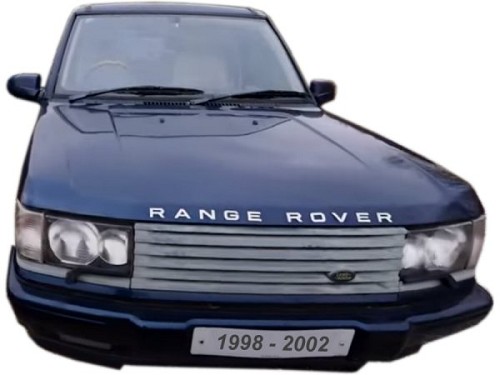
The decision was made to adapt the BMW six-cylinder engine, even though it was slightly undersized given the two-ton curb weight. Along with a facelift and now rectangular headlights, the revamped Range
Rover hit the market after a good six years of development. Shortly thereafter, it emerged that the decision to adopt the BMW diesel engine could not have been made entirely independently by the engineers,
as Aerospace was acquired in 1994.
First, the aging V8 was replaced by BMW's own engines. The famous Rover V8 was originally acquired from GM and was already in use in the 1961 Buick. BMW then also increased the displacement of the
diesel engine. For significantly more money than before, a particularly luxurious long version was now available. And since BMW was not satisfied with the quality of the workmanship, there was another update
to the Range Rover in 1998.
The Autobiography version, which is still popular today, must have been created around that time. Even today, it combines particularly luxurious equipment details into a package that, for example,
is sold together with the most powerful engine at a significantly higher final price. The turn of the millennium brought another change of ownership, ending BMW's experiment, which is said to have cost €6
billion. Despite the sales success of the Range Rover, losses were incurred here too due to extensive model updates. Thus, Land Rover was added to the Ford Group.Thus, Land Rover was added to the Ford
Group.
The emergence of a new generation of Range Rovers was astonishing. BMW had obviously already developed ideas for a new design, which were adopted by Ford. The engines were also retained in principle,
whereas the body was changed from a ladder frame to a self-supporting structure. And although the boxy design was retained, the car's redesign was clearly visible. This marked the beginning of a period in
which owners of the first series achieved a more modern design, for example with new lighting units.
This was also the case with the modified radiator grille of the 2004 model year. The Range Rover Sport is a peculiar hybrid, combining the Discovery ladder frame, including rigid axles, with the Range's drive
technology. At least they kept the air suspension. Perhaps a good idea for an entry-level variant, but of course it damages the existing model. This variant is still available, but has much more in common with
the original Range Rover than it did initially.
Between 2005 and 2007, the time came when all remaining BMW parts were replaced. This affected the V8 gasoline engine, the diesel engine, and the remaining interior components, including the infotainment
system. It was strange that manufacturers such as BMW and Ford first spent a lot of money improving their models and then sold the entire company. It was something like sprucing things up to get a better
price, but the reasons were probably entirely different. It certainly didn't hurt the Range.
In 2007, Tata bought Land Rover (profitable) and Jaguar (unprofitable) together for approximately €2 billion. Now Ford has also lost over €2 billion on the British experiment only in terms of the purchase price.
However, they considered themselves lucky because the financial crisis hit in 2008 and Ford was the only one of the Big Three to narrowly avoid bankruptcy. The Range Rover appears to have survived the
events unscathed. In 2011, the somewhat unusual Evoque variant was released. In addition to the modified (coupe) roof, the Evoque had less side length.
It arrived just in time for a change in market conditions. The luxury SUV segment has long been oversaturated, a situation that manufacturers have sought to counter by downsizing their models. Meanwhile, Land Rover was
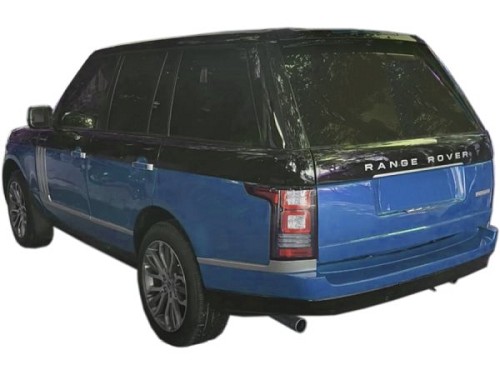
being produced in Brazil and, of course, in India and China. The fourth generation arrived in 2014. The engines had long since been given even more displacement and even compressors. The Range was even used in
racing situations, e.g. to achieve best times for production SUVs at Pikes Peak (USA).
However, this also marked the beginning of a period of significant exaggeration in automotive advertising. The Range Rover was said to have saved 420 kg thanks to its new aluminum body. This could not be verified,
especially not the fact that other savings may have been added. The gasoline engine was available as a V6, while the diesel engine has also been available as a V8 since 2007. The latest product was the Velar.
(Vee Eight LAnd R). This is how the first prototypes were designated. Since 2000, the company had been extremely successful, increasing its output more than tenfold.
kfz-tech.de/PAR21
|