|
| 
|
 Mercedes G-Class Mercedes G-Class
kfz-tech.de/PAR236
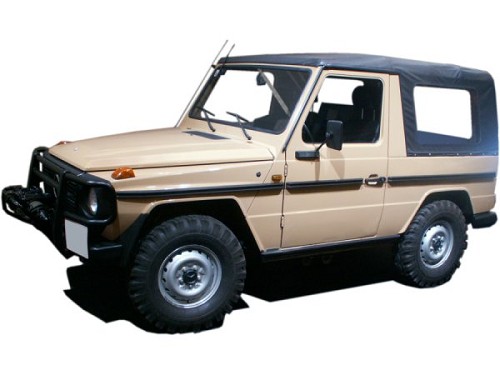
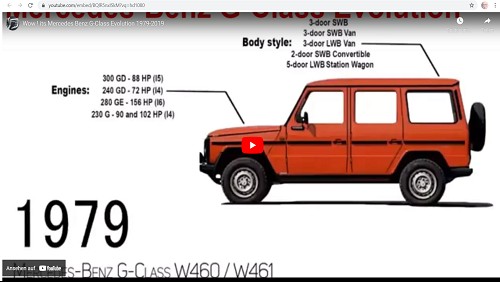
460 Diesel engineIn-line engine 4/in-line engine 5/in-line engine 5, 2399/2497/2998 cm3, pre-chamber, 90,9*92,4/87,0*84,0/90,9*92,4 mm, OHC, 137/151/172 at 2400 rpm, 53/62/59 kW
(72/84/80 HP) at 4400/46007/4000 rpm, M-4 (M-5, A-4), rear-wheel drive, selectable front-wheel drive, solid axles, coil springs, longitudinal/transverse control arms, recirculating ball steering, discs/drums, 3,7/2,4/1,7/2,0 m
/ 4,4/2,85/1,7/1,9 m, 1.900-2175 kg, 115/125/127 km/h, 1979/1987/1979.
460 Petrol engineIn-line engine 4/in-line engine4/in-line engine 6, 2307/2299/2746 cm3, CD carburetor/K-jetronic, 93,8*83,6/95,5*80,3/86,0*78,8 mm, 167/188/226 Nm at
2500/4000/4250/min, 66/92/115 kW (90/125/156 HP) at 5000/5000/5250 rpm, 1,870-2115 kg, 128/145/150 km/h, 1979/1982/1980.
The "G" stands for 'Geländewagen' (vehículo todoterreno) and refers to a joint project between Daimler-Benz and Puch that was launched as early as 1973. Daimler-Benz provided the powertrain components, including the
engines and interior equipment, while Puch handled the rest of the construction, including the off-road equipment. It was tested during development at Mercedes and ultimately manufactured at the Puch plant in Graz-
Thondorf.
Two long crossmembers arched over the front and rear axles, welded together via connecting tubes to form a ladder frame. At the rear, there were rigid axles with trailing arms; at the front, there were pushed rigid axles with
coil springs. Extra-long at the front for lots of spring deflection and the ability to offset. Initially, the entire powertrain—standard for Mercedes—was retained; only the propeller shaft was interrupted by a
transfer case, which delivered disengageable torque to the front.
kfz-tech.de/PAR237
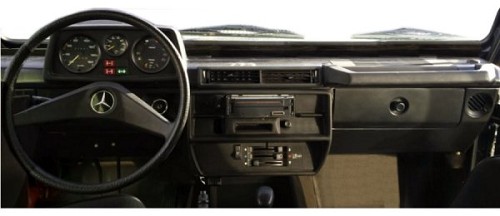
It's rare to see such a sparse, function-oriented dashboard (pictured above) in a Mercedes passenger car. The steering wheel, which originally came from the van, is probably no longer found in any restored G-Model.
That's also where the seats came from, here, with plastic upholstery in a tartan or checkered pattern. It was available as a semi-convertible with a canvas top, in closed versions with and without windows, and in both short-
and long-wheelbase configurations. That, in turn, determined the number of doors and the number of passengers (up to 9) that could be carried.
There were significant differences in terms of all-wheel drive. While the 460 model still had a selectable, separate transfer case, the 463 model was equipped with a transfer case integrated into the transmission, providing
permanent all-wheel drive with automatically engaging differentials. Thanks to the synchronous systems, the G-Model has always allowed drivers to engage all-wheel drive and the differentials while driving.

kfz-tech.de/PAR238
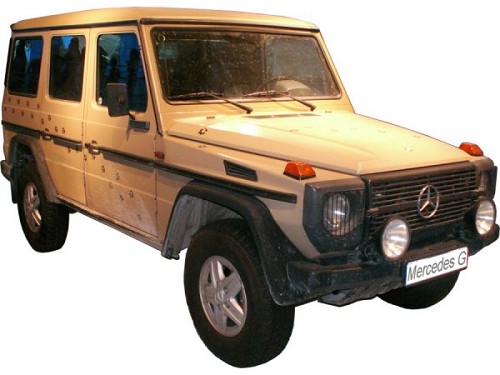
You can tell from the car's design that, 25 years before SUVs became respectable, it was initially very utilitarian and aimed solely at a specific target group. In addition to the usual clientele, this also included the military.
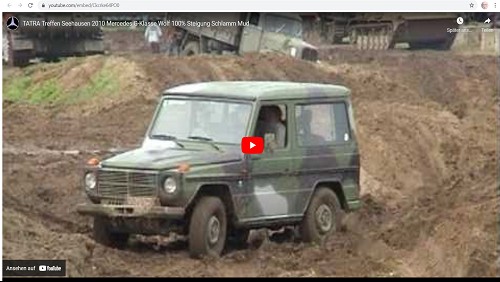
The car was so popular abroad that, as plans to create a Europe-wide light military version fell through, it led to French licensed production as the Peugeot P2 (Type 462). For the time being, the 'Bundeswehr' was still
contractually bound to VW's Iltis. It wasn't until much later that the G-model, known as the 'Wolf' (pictured above), came into their possession.
kfz-tech.de/PAR239
While most of the others were primarily on-road vehicles with good off-road capabilities, this vehicle was the opposite. Despite having two rigid axles and a high center of gravity, it was equipped with everything it needed to
perform well even on winding country roads. The suspension/damping and axle guidance still left plenty of room for improvements.
kfz-tech.de/YAR222
This also included a torsion-resistant frame with mounting points that were tested and redesigned using methods borrowed from commercial vehicle manufacturing. Of course, all functions had to be guaranteed both in
hot and cold regions of the world. The G-Model was built to withstand extremely heavy use and has the second-longest production run of any model in the entire Daimler Group.
kfz-tech.de/YAR223
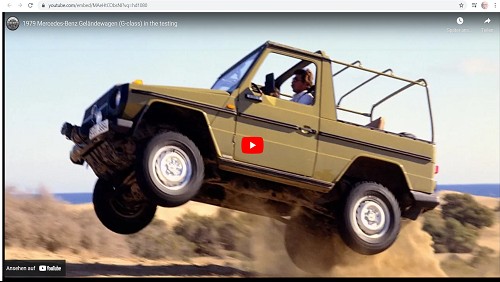
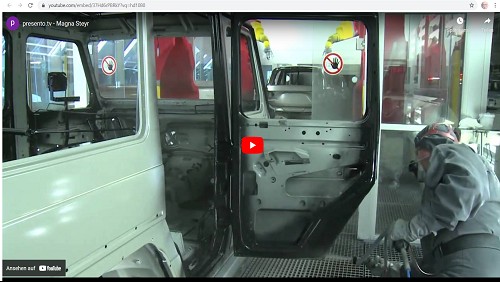
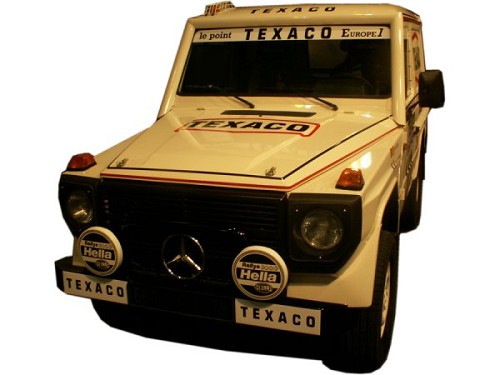
The G-model has been manufactured by Puch since 1982 (video above). In the Alpine countries and in Eastern Europe, it was also introduced under that name. The Shah of Persia had initiated the project, as he intended
to order an incredible 20,000 units of the car, which, despite its basic features, wasn't exactly cheap. His love of expensive toys clouded his view of the potential of his country, despite its oil wealth. He was swept away by
the revolution at the end of 1978, led by Ayatollah Khomeini.
kfz-tech.de/PAR240
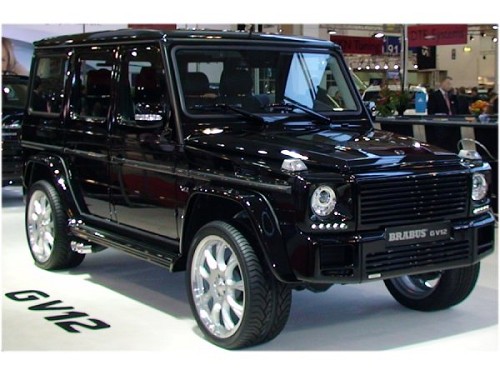
As a result, we were able to witness how two very different partners grew closer together. After all, Puch tended to build smaller vehicles, such as the modified Fiat 500 and the Haflinger. Over the course of
time, Mercedes managed to persuade even die-hard designers of honest, no-compromise off-road vehicles to make more and more concessions, helped by the momentum of its sales successes.
kfz-tech.de/PAR241
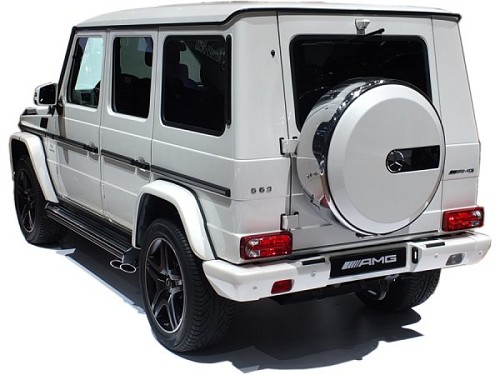
While initially even gasoline engines with carburetors and, of course, diesel engines with prechamber technology were installed, this changed very quickly, as did the interior design. The privateers demanded more comfort
and are willing to pay more for it. After all, the tank capacity was as high as 95 liters and didn't drop to 75 liters until much later. Ultimately, the G-Model—albeit sometimes via detours via tuners—came with all kinds of
engines from the Mercedes lineup, naturally equipped with a significant boost in horsepower (picture above).
kfz-tech.de/PAR242
As you can imagine, compared to the relatively aerodynamic sedans, this body style couldn't reach anywhere near the same top speeds. At least they managed to keep fuel consumption somewhat in check, in part by using
longer gear ratios. At that time, the G-model still featured a manual transmission; an automatic transmission was later offered as an option for larger engines. We also had to learn a new approach to their durability,
because it's not always just Mercedes' hand-operated switches that are problematic.
kfz-tech.de/YAR224
Auch Nicht-Enthusiasten des G-Modells konnten ihm seine herausragenden Geländeeigenschaften nicht absprechen. The car offered a solid package with plenty of practical off-road utility and reasonably decent
performance on the road, even if it went a bit overboard with comfort, as is typical for Mercedes. Later on, nothing in the interior reminded one of the simplicity and practicality of an off-road vehicle. All in all, it's now a good
option for an evening out at the opera.
kfz-tech.de/YAR225
kfz-tech.de/YAR226
kfz-tech.de/YAR227
|
|