|
| 
|
 BMW BMW
kfz-tech.de/PAR260
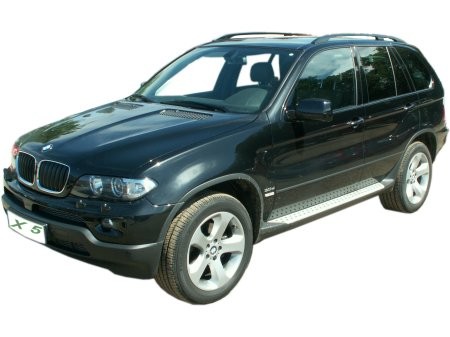
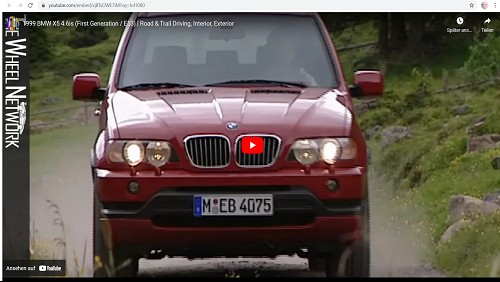
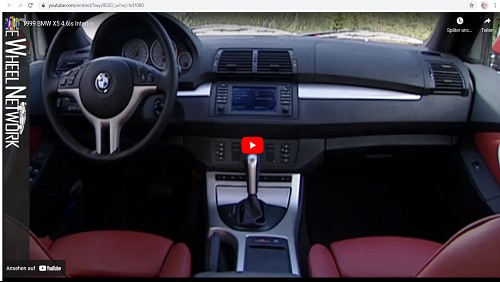
X5 (E 53), V-8, 4.398 cm3, 92,0 * 82,7 mm, 10,0 : 1, Super Plus, DOHC (chain), 4V, 440 Nm 3600 rpm, 210 kW (286 HP) 5400 rpm, front-engine (longitudinal), all-wheel
drive, five-speed automatic transmission, McPherson-struts, multi-link suspension, disc brakes (internally ventilated), 235/65 R 17 H (7,5''), 4,67/2,82/1,87/1,71 m, 465 - 1550 liters, 93 liters,
2170 kg incl. driver, approx. 205 km/h, 230 km/h with VR tires, 1999 - 2006, fom 85.000 DM.
kfz-tech.de/PAR261
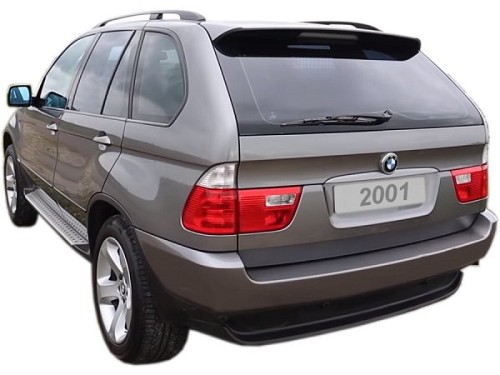
BMW was back among the all-wheel-drive manufacturers. And not just with the Land Rover subsidiary of the time, nor with a converted sedan, but with a truly large off-road vehicle, albeit one
of the sporty variety. It didn't have much more interior space than a 5 Series station wagon, and it didn't even come close to its fiercest competitor, the Mercedes M-Class, partly because of its
sloping rear end.
kfz-tech.de/PAR262
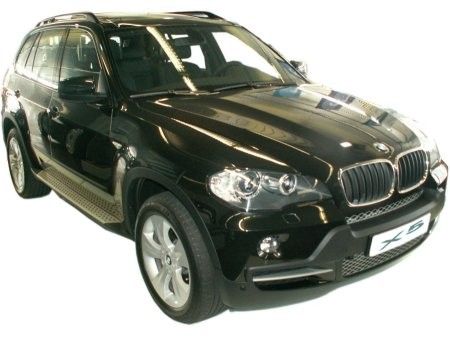
Like this one, it was manufactured in the U.S. The production facility in Spartanburg, South Carolina, was still a challenge at the time. They had started with the Z3 and modified the models
delivered to Europe. The hope now was to immediately achieve a standard appropriate for local customers. By then, that was no longer an issue, quite the contrary. In light of the weak dollar, Spartanburg
underwent massive expansion.
kfz-tech.de/PAR263
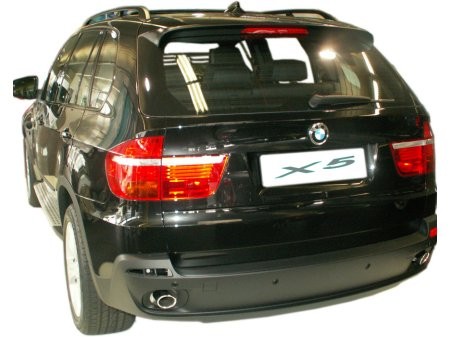
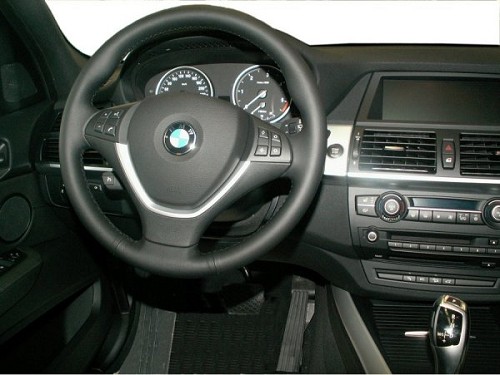
Why did BMW become interested in producing its own SUVs in the late 1990s? Because they became incredibly trendy, and hardly anyone wanted to, or was able to, seriously take them off-road.
That had an impact on all-wheel-drive technology. No more heavy transfer cases or longitudinal or transverse differentials. Electronics were also gaining ground in this area and, as with the M-Class,
solved traction problems through the braking system.
kfz-tech.de/PAR264
The company was characterized by a high degree of continuity, and all-wheel drive played an important role in that. Let's take a look at how it was incorporated into the company's philosophy. With a
few minor exceptions, every BMW has basically looked the same from below since the 1960s. The engine is in the front, followed by the transmission and the propeller shaft, and only at the rear does
the storque reach the wheels.
Yes, the M1 did have a mid-engine layout, but it turned out to be a flop. It is telling that they retained the 'M' and used it for several very sporty vehicles that, in turn, reflected the concept mentioned earlier.
In addition, for many years, BMW produced a sedan with a three-box design. Attempts to launch a touring model and a convertible as well initially failed due to either a lack of buyer interest or stability.
Certainly, there were some very beautiful coupes, but even those were simply coupes with an attached trunk, as were the convertibles derived from them. Yes, recently the smallest model has also been
available with front-wheel drive. But actually, the acquisition of Mini should have prompted a closer look at this issue. This type of drive system had not yet truly won a place in the hearts of BMW fans.
And what did that have to do with all-wheel drive? That came at just the right time. After all, even with that, the cars still looked almost the same from below. Not that we want to underestimate the difficulties
involved in modifying the body and the potential for the additional front-wheel drive system to interfere with the engine, but the basic principle remains the same.
kfz-tech.de/PAR265
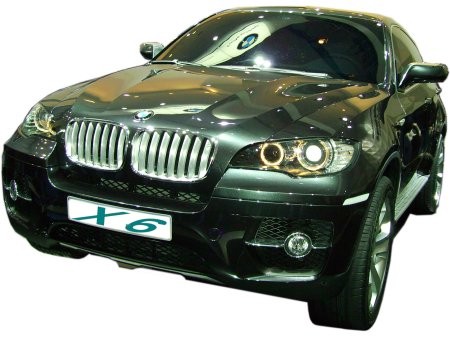
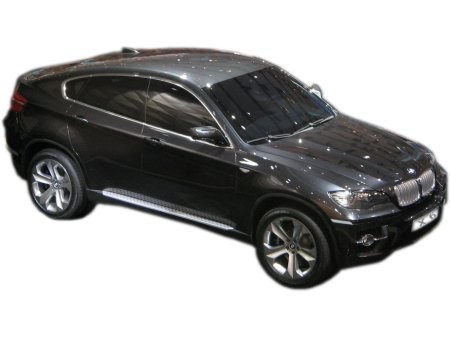
From there on, the direction of the development was open. It was no longer just a matter of laboriously deriving station wagons from sedans; instead, the designers were able to let their creativity run wild,
which was particularly evident in the X6, which even set a new trend. The all-wheel drive also fit in with the company's tendency to emphasize its sportiness. It was certainly remarkable that they managed
to win over the hearts of young people much more effectively than Mercedes, for example.
kfz-tech.de/PAR266
What teenager would buy an outdated luxury car and only then realize the risks? That would be almost unthinkable with a Mercedes, but it happened quite often with BMW. Just take a look at all the
repair tips for old BMWs—they're meant to help young people who are short on cash. Some people have already asked whether a 535i is the right car for apprentices. BMW owners were therefore
likely more likely to get rid of their old cars than owners of other luxury brands.
The brand's conservatism becomes somewhat unsettling when you look at its path toward e-mobility. That was boldly initiated years ago with the i3. Carbon fiber, at least for the upper part of the
body, and a truly sustainable manufacturing process that isn’t just achieved by purchasing certificates, a rather forward-looking concept for a manufacturer, on a global scale, of small-series,
relatively high-priced cars.
And now: Only the letter 'i' is left. There was so little visible progress in the area of pure electric vehicles that it was not even possible to say whether, and for how long, conventional technology will continue
to be developed. For example, will the 3 Series also get the front-wheel drive from the 1 Series and 2 Series Active Tourers, or will it stick with the front-engine, rear-wheel-drive layout?
kfz-tech.de/PAR267
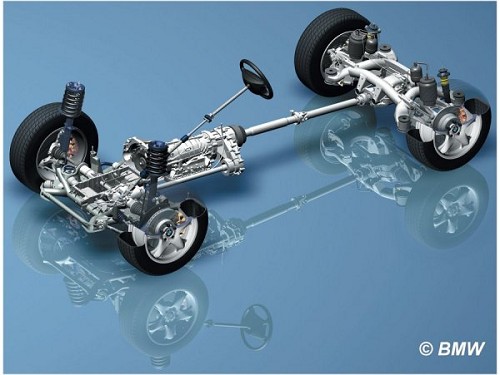
According to this, all larger BMWs were equipped with an electronically controlled front-wheel drive system that, depending on the model, could occasionally direct 100 percent of the power to the front axle
for short periods. In the smaller and mini models, a Haldex clutch was installed in the torque path to the rear axle, which even makes it possible to recreate the old rear-wheel-drive feel. Then everything
would have been fine again for drivers who particularly enjoy driving sportily.
Yes, even the M models were available with all-wheel drive. That said, not all sporty drivers preferred one. In fact, the additional weight might have been a secondary concern, since this model line, for example,
the new M4, had already fallen slightly out of favor due to its increased weight, and the cost-saving measures, which were offered as optional extras at a high price and only partially offset the increase.
No, perhaps the stronger argument against all-wheel drive was that you didn't actually want the car to be that stable, but rather wanted to let it oversteer a bit on purpose, provided the country road was wide
enough to allow it. That’s when the fundamental question of whether to support or oppose all-wheel drive arose, even though it had long since made its way not only into rally racing but also into regular
road racing, such as the DTM. It seemed it didn't stand a chance only when it came to Formula race cars.
kfz-tech.de/YAR240
kfz-tech.de/YAR241
|
|