|
In-line Two-cylinder Four-stroke Engine
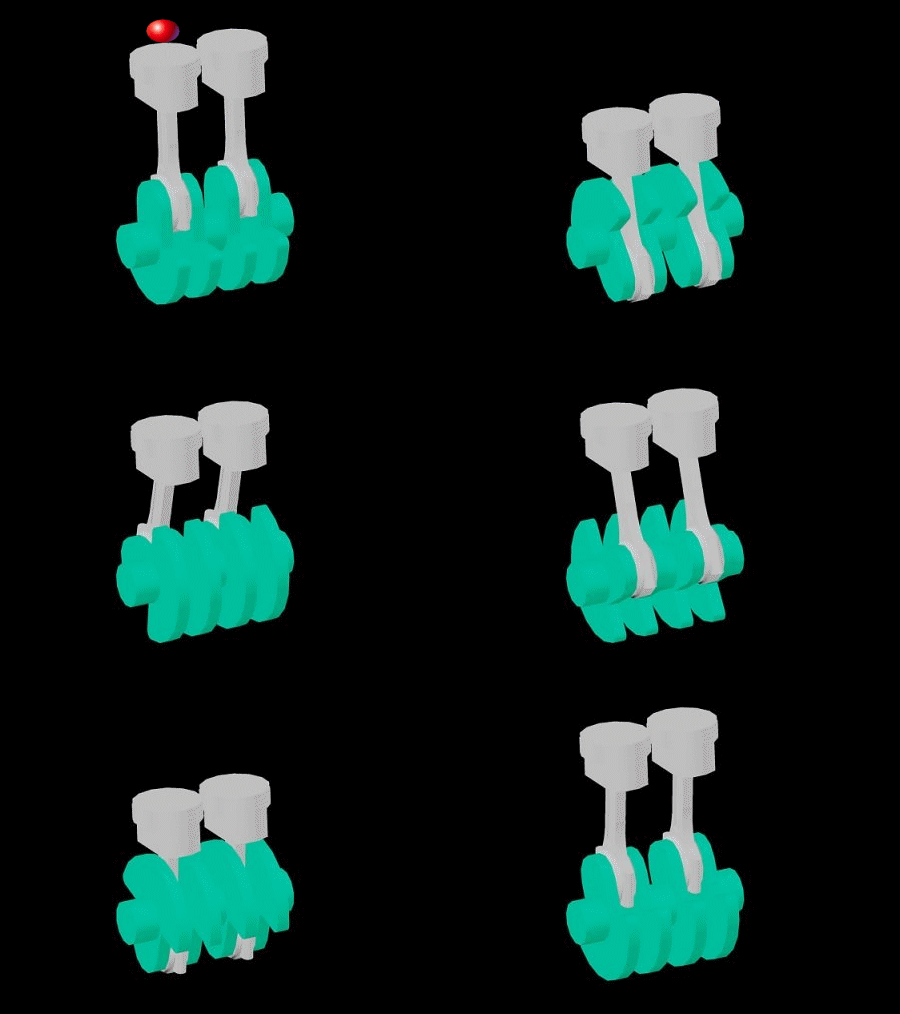
Function
Compared to the single cylinder engine, the four-stroke two-cylinder in-line engine does not have a substantially improved mass balance, in spite of a
higher construction expenditure,
however, avoids with quite rare exceptions three consecutive empty strokes and bears a quieter engine run. In addition, the usual advantages of multi-cylinder engines remain of course. The cubic capacity is distributed
on two cylinders, lowering the strain and, e.g., the speed and the performance is raised.
How it works
The four-stroke two-cylinder in-line engine resembles the single cylinder engine. Two pistons are in the same way moved from
TDC to BDC and back. If they are both in the top-dead centre (TDC), one just finished compressing and starts with the power stroke, while the other has just finished exhausting and now begins with the intake stroke.
Sometimes manufacturers (KTM) also try to improve the mass balance by implementing two crankpins, staggered by 180°. Then, however, two empty strokes follow two power strokes, influencing the operation of the
engine clearly negatively. 05/08
|
|