|
Six-cylinder In-line Engine
Assignment
The six-cylinder in-line engine combines cultured running with higher performance expectations and this without the disadvantages of the charged four-cylinder. Thereby, one has to accept the increased construction
effort and the difficulties of transverse mounting.
Function
As with the four-cylinder engine, the pistons 1 and 6, 2 and 5, 3 and 4 move as pairs, this means that the processes occuring in the first three cylinders, accurately reflect what's happening in the other three. This underlines it's close
relationship to the three-cylinder in-line engine. The difference to the four-cylinder, is that all the crankshaft offsets do not lie on one level. They are staggered by 120° to each other. The ignition interval is also 120°. Theoretically there are several
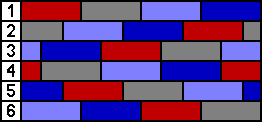
possible firing orders, in practice however, mostly only one: 1-5-3-6-2-4.
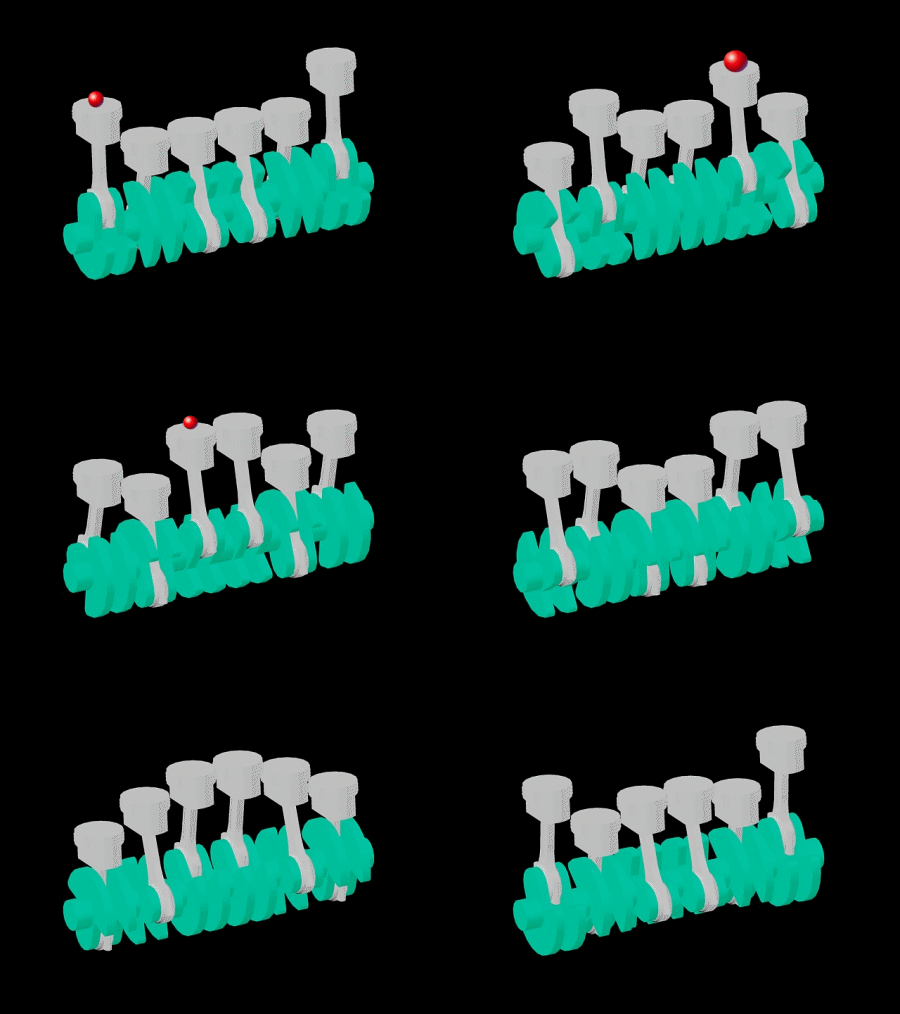
The crankshaft is also shown here (picture 2). In the picture below, one can recognize the above mentioned offsets in three levels and the difference in width between the conrod- and main bearing, whereby, you will
notice that the center bearing is wider than the others. Because there is a main bearing between every two conrods, there are 13 sliding bearings, divide them and you have 26 bearing-cups.
|
|