Dual-circuit Brake Valve
Assignment
The dual-circuit brake valve should enable a gentle operation of the compressed-air brake. It is also known as brake-pedal brake valve. Depending on the deflection of the brake-pedal, the operating pressure increases
steadily in both brake circuits separately. These pressure-increase rates are legally stipulated. At the same time, the resistance force of the pedal must also steadily increase.
Function
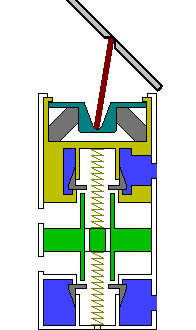
Partial braking
The force is transferred from the pedal through a push-rod to the piston. From there it goes through a rubber distance compensation spring to the reaction piston. On its way down, this allows, at first, compressed-air to flow into the first brake circuit. The same thing happens
below with the second brake circuit because in addition, it presses the cradle piston downwards.
Through the compressed-air flowing into the brake circuits an an opposing force is developed, which presses the reaction piston upwards against the distance compensation spring. At a
certain pressure, depending on the pedal travel, this connection is closed. According to the pressure on the brake, an opposing force is evident on the brake-pedal.
Full braking
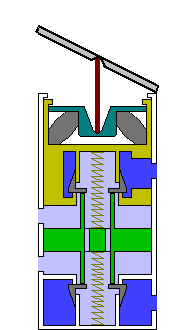
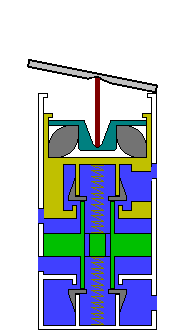
The brake pedal is fully depressed. Through the valve, the cradle piston is pressed downwards by the reaction piston
. Both brake circuits are supplied with the full amount of stored pressure. 05/10
|